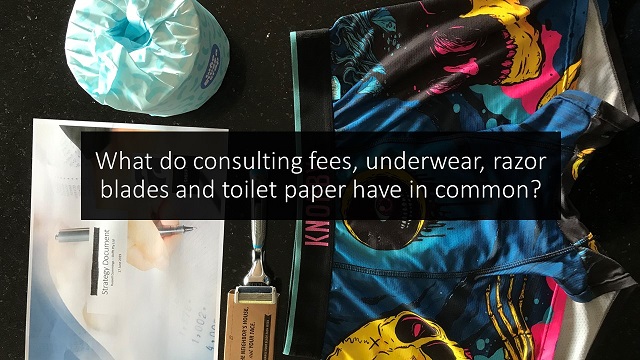
What do consulting fees, underwear, razor blades and toilet paper have in common?
OK, so what do consulting fees, underwear, razor blades and toilet paper all have in common?
The real connection is that they all have a similar mechanism for charging for their services or products. They are all part of a subscription model.
Pricing your products and services is a highly strategic activity that is core to your Marketing Strategy and is often overlooked by business owners. Too many people take the easy way out and do exactly what the competition is doing. They charge a similar amount and do this in a the same way as the others.
What we are failing to grasp is that pricing is a key Positioning Strategy for your business and by copying the competition we are losing any competitive advantage that we may potentially gain. You can gain this advantage in many ways but 2 key areas are:
1. Your Price Level – what does your product (or service) cost relative to the competition? 2. Pricing Mechanism – How do you charge for your services/product? fixed fee, RRP, subscription, hourly rate, commission, etc.
Setting your Prices
There are 5 common tools for setting prices:
Cost Plus
RRP
Competitor Pricing
Market Will Bear
Target Pricing
Cost Plus – as the name suggests is a very common way to price based on your costs. Simply add up your costs to deliver and add a margin for profit and voila you have your price.
RRP – This is where your supplier sets the pricing via a “Recommended Retail Price” Model. You will usually have purchased the product at a wholesale level with an in-built margin to get to RRP. You may also be restricted by Government Policy in some areas like: healthcare.
Competitor Pricing – This is where you base your pricing on the competition and it can be a dangerous strategy as its easy to price to low. Some of your competitors will have poor business skills and will no understand how to price to make a profit.
Market Will Bear – this is where you test your pricing in the market and keep work out where will give you the best return in terms of volume and price. This takes some effort but is often the better strategy for your business.
Target Pricing – This is a different technique that involves determining the price that will generate the most sales for your business. You then deduct your profit to determine a target cost for your product or service. Using this information you can then decide what to features, benefits, packaging, distribution options to include in order to meet your cost target. Its a powerful pricing tool that is rarely used but I suggest that you give it a run.
In reality, we should use a variety of pricing tools to help set our price unless RRP is your only option. My experience is that Cost Plus should set the minimum price. Competitor Pricing should allow us to explore the range (use the phone (mystery shopper calls) and/or internet to do a quick scan of competitor pricing. Typically, if your products are of similar quality them set your price below that market leaders and above the average and use “Market Will Bear” and/or “Target Pricing” to explore some pricing options and lift your prices above the competition.
Establishing a Pricing Mechanism
The second element to consider is your pricing mechanism. Again, don’t be lazy and accept what the competition is doing.
20 odd years ago, when I went out on my own as a Business Consultant everyone charged by a the hour or day for their services. When I asked my clients what they disliked about the “Professionals” that they worked with the overwhelming response was high hourly rates and a “surprise” in the mail (the bill). I explored a range of options with my clients and settled on an agreed fee broken down into monthly installments like a “subscription”. That pricing mechanism has the been the basis for my successful coaching services for the last 20 years. Check out my website to see how the coaching programs play out – https://shifft.com.au/programs/
Now I have a range of innovative suppliers including software (SAAS – “Software as a Service” aka a Subscription) and the products i mentioned above, that are all using a subscription model to differentiate their business:
Underwear – Australian Company “Knobby” (https://knobbyunderwear.com.au/) delivers me a quality pair of jocks every month. Each month has a unique design and they are the most comfortable “jocks” I’ve worn for years. Who would have thought there was a market to buy underwear by subscription?
Razor Blades – Fed up with paying extortionate prices for razor blades from the majors, I went looking for options to provide me with a quality product for less. I soon found Dollar Shave Club (https://au.dollarshaveclub.com/home) who deliver me high quality razor blades and shaving products on subscription basis.
Toilet Paper – We have been buying out TP on subscription for a couple of years from social Who Gives a Crap (https://au.whogivesacrap.org/) a socially driven business that donates 50% of profits to build toilets in the developing world. The product quality is excellent and it arrives on a regular schedule.
These are just a few examples of the types of products and services that you can access via a different pricing model – in this case: subscription. For each pricing model there will be pros and cons but unless we explore some alternatives and look beyond copying what everyone else is doing then we will fail to differentiate our business in the marketplace.
How could you build a subscription model into your product or service offer?
I’d also be interested in your experiences with trying different pricing models for your business and/or businesses that you use. Comment below.
As we gear up for the festive season, I’m taking a moment to share some thoughts on how you can make the most of the holiday downtime to think about your business. We’re talking about a little reflection, a bit of reading, and some strategic planning—all in simple, actionable steps.
I often find the best time is when you’re not “up to your eyeballs in it” and the Christmas/New Year period is often a good time to reflect on the previous year and to start setting goals and plans for 2024. To that end, here are a couple of suggestions that you might find useful.
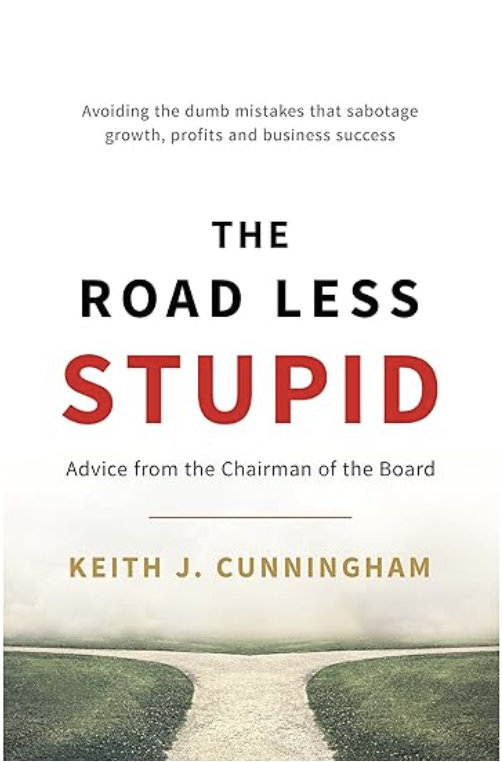
1. Journal Your Way to Clarity Grab an A5 or A4 journal (plain pages – with or without lines). This isn’t your typical diary for daily activities (“Dear Diary, today we went to the movies…” as much fun as that would be) – it’s about having a place for you to write your ideas, thoughts, concepts, issues and plans for your business and life. Trust me, it’s a game-changer. 2. Recommended Read: “The Road Less Stupid”Looking for a thought-provoking read? Check out “The Road Less Stupid” by Keith J. Cunningham. It’s a straightforward guide to quality thinking about crucial business matters. The book starts off by talking about how you set up a time and place for quality thinking but the real value comes in subsequent chapters. Keith Cunningham cleverly poses a series of questions for contemplation on a variety of topics. Chapters can be read independently of the other and in no particular order. It is a great book available on both hardcover and kindle versions (you can read it on your phone, computer and/or tablet). Take notes in your journal, and let the ideas percolate. 3. Write Yourself a Letter from the Future Here’s a simple yet powerful exercise. In your journal, set a date 3 to 5 years ahead and write a letter to yourself. Describe your business and life in vivid detail, as if it’s already happened. Talk about how it’s grown and what you have achieved. Be specific and detailed. It’s a personal exercise meant for your eyes only, but the impact can be profound. (If you don’t believe how powerful this can be, let me tell you about my experience at a future meeting). 4. Craft Your 2024 Plans Let’s talk about planning for the future. Depending on your planning cycle, this could mean a full Annual Operating Plan for 2024 or just a quick update. Check out these handy templates for 90-day Plans and an Annual Operating Plan:
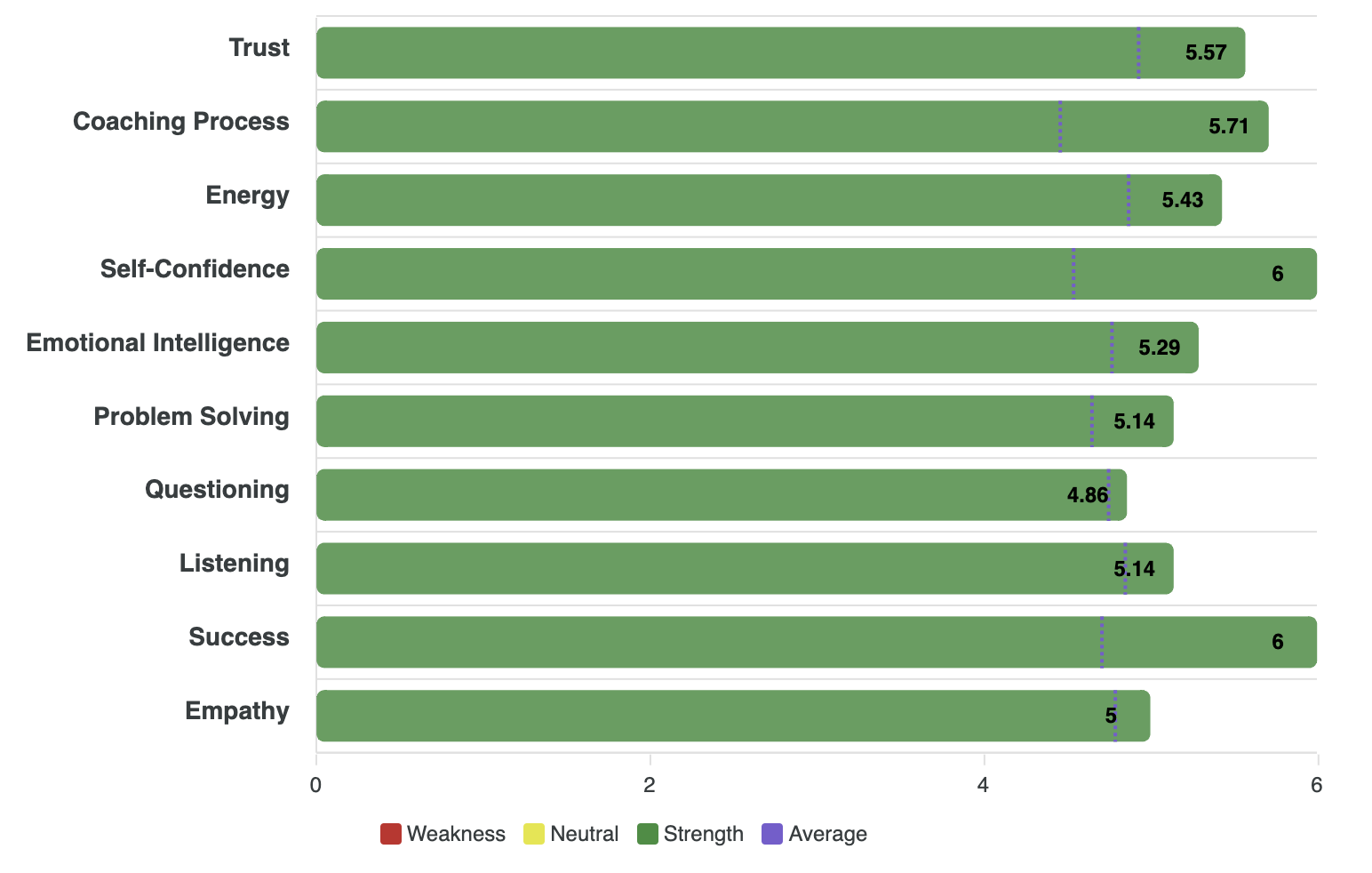
Make notes, set goals, and keep them in your journal for easy reference. 5. Run Some DiagnosticsTake a moment to run some diagnostics on various aspects of your business and life by using our free Diagnostics. There are about 20 Diagnostics that cover a range of topics from Growth and Profits to Life Balance. Each uses a similar structure of 25+ questions (no commercially sensitive information provided) to give you a score on 6-10 key factors, highlighting strengths and weaknesses. Assess the results and summarise your thoughts in your Journal. Use them as a foundation for building your 2024 plans.
A Proactive Start to 2024 As we close the chapter on 2023, let’s use the holiday break to our advantage. Whether it’s through journaling, reading, envisioning the future, planning strategically, or running diagnostics, these simple steps can pave the way for a purposeful and successful 2024. Got questions or thoughts to share? Leave a comment below. Wishing you and your family a happy, safe and healthy Christmas and a prosperous New Year. Cheers,
I hope you’re well and surviving these challenging times…
Your response to COVID19 will depend on your industry, business structure and level of resources and I’m sure that you have addressed the most pressing issues and have locked down your business to weather the storm (if required) but where to next?
As our Governments start to contemplate lifting restrictions and “kick starting” the economy, now is the time to ramp up your marketing activity and start building momentum for the future.
Do not wait for the restrictions to be lifted to begin your recovery – START NOW! I am finding that people are looking beyond COVID19 and are starting to build resources and contacts to help them through the Recovery Phase so you need to be building your profile.
Marketing typically has a lead time to start producing results – so start your activity now and build momentum.
What sort of things should you be doing?
1. Get your post-COVID19 Business Strategy sorted – for many businesses COVID19 has been a catalyst for changes in how we: operate, deliver our products and/or services, manage teams, working locations, pricing models, etc. What changes will you hang on to? What old practices will you discard? Why? What will your business look like post-COVID19?
2. Ramp up your marketing activities – once you are clear on your strategy, then its time to double down on your marketing and sales activity.
Its important that you start this ahead of the curve as marketing has a lead time. If cash is still tight then think of all the free and low cost activities that you can do.
Your marketing activities should be focused on our 3 point Promotion Model: Networking, 1-to-1 and Broadcast Activities.
The emphasis you put on each element will depend on your specific business. Some potential activities could include:
Join some networking groups – most are 100% online at the moment so you can expand your geographic reach quickly and easily – Click here for networking resources – https://shifft.com.au/business-networking-resources/
Revise your website and social media presence – take the time to upgrade your website and/or social media profiles. If cash is tight, then change the content on your website not the layout. If you don’t have a website then now is the time to get one!
Ramp up your activity on social media – Pick one or 2 social platforms that fit with your target market and start adding regular content and interacting with your connections.
Build content that demonstrates “capability” – write blog articles, produce videos and add content to your website that demonstrate that you are an expert in your field. “5 top tips for xxxx” articles, etc. Watch our video on how to convert your blog into a video – https://www.youtube.com/watch?v=N_bq3pRSvog
Share this content with your clients and prospects – Send copies of your new content to your mailing lists – post content on social platforms – rework popular content and post it on authority sites to increase SEO
Explore online advertising – If your budget allows then consider advertising on Facebook, Google Adwords, etc. With less competition for key words on Google you may find that your funds go a lot further. Engage professional help to get better results or be prepared to learn on the run.
Connect with your Referral Sources – make contact with your “Centres of Influence” and rekindle relationships that may have gone cold over the last few months.
Ramp up your 90 Day Contact Program – most of these activities should be part of a structured 90 Day Contact Program for your business. If you don’t have a 90 Day Contact program in place or have let it slip – now is the time to re-ignite it. THIS IS THE MOST IMPORTANT THING YOU CAN DO TO GROW YOUR BUSINESS – You can download a free copy of the Program here – https://shifft.com.au/90-day-contact-program
So, now is the time to ramp up your marketing activities as we build towards a relaxation of restrictions and our economy starts to recover. Don’t wait for the recovery – be proactive and start working on it today.
Russ
P.S. Our FREE Training Program offer is still available. Through our partnership with Mindshop (www.mindshop.com), I am able to offer you and your team 2x business online training programs (from our suite of 26 courses) for FREE. This offer is open to anyone who would like to take it up. You can select the courses that you would like to do and you will have 6 months to complete them. Limit of 2 courses per person.
P.S.S. If you would like to have a 30-minute, no cost, no obligation, no “sales pitch” discussion with me about navigating COVID19 in these trying times, then please use the link to find a mutually convenient time for a zoom call. We’re all in this together and I’m happy to help – https://calendly.com/russellcummings/30-minute-call
In the current environment, its a great time to be doing some planning with the team but how do you do that when everyone is working from home?
On Tuesday, I leveraged the technology and ran a 100% online Productivity Improvement Workshop for Darren Laarhoven and the Audit Team at UHY Haines Norton in Brisbane. We had 8 team members in 8 different locations and we all collaborated on Zoom using breakout rooms, voting polls and Google Docs instead of butchers paper!
The outcomes from the workshop were comparable with a F2F Workshop as the team were able to talk in small groups and build plans and analyse productivity. The team identified 2x big productivity projects to work on immediately that should have a great impact on efficiency.
While Darren I agreed that a face-to-face workshop was better in many ways, the online alternative gave us great results without the hassle and costs of venues, catering, travel and accommodation.
Once you get around how to make best use of the technology, and meld your workshop process and materials to fit with this, then the workshop is relatively straight forward.
I can see this type of workshop being a viable alternative in a post-COVID19 environment as businesses question the benefits and costs of travel and pulling groups of people together in one venue. It will work well for Strategic Plans, Leadership, Sales, Productivity, Planning Workshops and Conferences.
If you would like to talk about how we can run a workshop process for your business in a virtual environment then use the link to book a call with me – https://calendly.com/russellcummings/30-minute-call OR simply pick up the phone and give me call on my mobile 0414 929 585.
Stay Safe
Russ
P.S. Our FREE Training Program offer is still available. Through our partnership with Mindshop (www.mindshop.com), I am able to offer you and your team 2x business online training programs (from our suite of 26 courses) for FREE. This offer is open to anyone who would like to take it up. You can select the courses that you would like to do and you will have 6 months to complete them. Limit of 2 courses per person.
For registration and information on courses available, go to https://shifft.com.au/free-online-business-training-programs/
We have compiled links to key Australian COVID19 Information Resources. Follow the links.
CHIEF MEDICAL OFFICER COVID UPDATES
COVID-19 is a respiratory illness caused by a new virus. Symptoms include fever, coughing, sore throat and shortness of breath. The virus can spread from person to person, but good hygiene can prevent infection. Find out who is at risk and what you should do if you think you have COVID-19.
Find financial assistance, eligibility and timing for the new government support for Australian businesses. We’ll be updating this page as new information is available.
In recent discussions with clients, I realised that there was a need for some foresight-based work to help them clarify what their strategy around COVID-19 might be over the next 18 months.
WORKPLACE HEALTH AND SAFETY – COVID-19 INFORMATION
It doesn’t matter if you’re a worker or someone who is responsible for workers, you must identify and manage work health and safety risks including the exposure to COVID-19.
EMPLOYER RESPONSIBILITIES – NOTES FROM THE CHAMBER AND CCIQ
The emergence and spread of COVID-19 (coronavirus) over the past few days presents a potential risk to Queensland small businesses. If you’re an employer you need to know your obligations and plan how you might respond if coronavirus impacts your workplace more directly than just running out of toilet paper.
The government has enacted legislation to support its economic response to novel coronavirus (COVID-19) to help the economy withstand and recover from the economic impact of coronavirus.
The World Health Organization has announced that COVID-19 is a pandemic. Find out how we are monitoring and responding to the outbreak, how you can help slow the spread of COVID-19 in Australia, and what to do if you have symptoms.
Find coronavirus information and assistance for businesses from the Queensland and Australian Governments
https://www.business.qld.gov.au/
FEDERAL GOVERNMENT SUPPORT FOR SMALL BUSINESS
The Australian Government has announced measures to support businesses impacted by the coronavirus (COVID-19). If you’re a sole trader, learn what your business can get and where to go for help.
The following measures are designed to provide immediate financial support for local businesses currently in survival mode with reduced revenue and significant cash flow difficulties.