As we gear up for the festive season, I’m taking a moment to share some thoughts on how you can make the most of the holiday downtime to think about your business. We’re talking about a little reflection, a bit of reading, and some strategic planning—all in simple, actionable steps.
I often find the best time is when you’re not “up to your eyeballs in it” and the Christmas/New Year period is often a good time to reflect on the previous year and to start setting goals and plans for 2024. To that end, here are a couple of suggestions that you might find useful.
1. Journal Your Way to Clarity Grab an A5 or A4 journal (plain pages – with or without lines). This isn’t your typical diary for daily activities (“Dear Diary, today we went to the movies…” as much fun as that would be) – it’s about having a place for you to write your ideas, thoughts, concepts, issues and plans for your business and life. Trust me, it’s a game-changer. 2. Recommended Read: “The Road Less Stupid”Looking for a thought-provoking read? Check out “The Road Less Stupid” by Keith J. Cunningham. It’s a straightforward guide to quality thinking about crucial business matters. The book starts off by talking about how you set up a time and place for quality thinking but the real value comes in subsequent chapters. Keith Cunningham cleverly poses a series of questions for contemplation on a variety of topics. Chapters can be read independently of the other and in no particular order. It is a great book available on both hardcover and kindle versions (you can read it on your phone, computer and/or tablet). Take notes in your journal, and let the ideas percolate. 3. Write Yourself a Letter from the Future Here’s a simple yet powerful exercise. In your journal, set a date 3 to 5 years ahead and write a letter to yourself. Describe your business and life in vivid detail, as if it’s already happened. Talk about how it’s grown and what you have achieved. Be specific and detailed. It’s a personal exercise meant for your eyes only, but the impact can be profound. (If you don’t believe how powerful this can be, let me tell you about my experience at a future meeting). 4. Craft Your 2024 Plans Let’s talk about planning for the future. Depending on your planning cycle, this could mean a full Annual Operating Plan for 2024 or just a quick update. Check out these handy templates for 90-day Plans and an Annual Operating Plan:
Make notes, set goals, and keep them in your journal for easy reference. 5. Run Some DiagnosticsTake a moment to run some diagnostics on various aspects of your business and life by using our free Diagnostics. There are about 20 Diagnostics that cover a range of topics from Growth and Profits to Life Balance. Each uses a similar structure of 25+ questions (no commercially sensitive information provided) to give you a score on 6-10 key factors, highlighting strengths and weaknesses. Assess the results and summarise your thoughts in your Journal. Use them as a foundation for building your 2024 plans.
A Proactive Start to 2024 As we close the chapter on 2023, let’s use the holiday break to our advantage. Whether it’s through journaling, reading, envisioning the future, planning strategically, or running diagnostics, these simple steps can pave the way for a purposeful and successful 2024. Got questions or thoughts to share? Leave a comment below. Wishing you and your family a happy, safe and healthy Christmas and a prosperous New Year. Cheers,
As we approach the end of 2023, it’s time for small business owners and managers to prepare for the runway that will catapult your business into a successful 2024.
In Australia, the months leading up to Christmas and even into early January are often seen as a period of slowdown and relaxation. However, this can be a missed opportunity for those who wish to gain a competitive edge in the coming year.
Now, this article, video, and our Runway to 2024 Checklist will guide you through a strategic plan to make the most of this crucial period and set your business up for success in 2024.
Setting Clear Goals
The first step in preparing for a successful 2024 is setting clear and achievable goals. Start by defining your financial target. Break it down into manageable chunks. For example, you may aim to secure $300,000 in additional work between now and February 2024. This could translate to securing five clients at $60,000 each. By creating specific and measurable objectives, you’ll have a roadmap to follow.
Ramp Up Your Marketing Activities
To build momentum for 2024, you need to ramp up your marketing activities. This involves three key components: networking, one-to-one connections, and broadcast activities.
Networking: Strengthen your existing relationships and seek new ones. Attend industry events, join business associations, and actively participate in relevant online communities.
One-to-One: Building strong referral partnerships is essential. Collaborate with other businesses or individuals whose services complement yours. By referring each other’s clients, you can expand your reach.
Broadcast Activities: Elevate your online presence and expand your reach through various channels. This includes social media, direct emails, blogs, content creation, video, and even podcasts. Consider local advertising if it’s relevant to your business. The key is to diversify your marketing efforts to capture a wider audience.
Improve Sales Skills and Systems
Generating leads is one thing, but converting them into clients is equally crucial. To ensure a higher conversion rate, invest time and effort into enhancing your sales skills and systems. This may involve training your sales team, refining your sales scripts, or automating parts of the sales process. The goal is to make sure that you can handle an influx of leads efficiently and turn them into paying customers.
Measure and Celebrate Your Success
Setting goals and working towards them is essential, but it’s equally important to measure your progress. Create clear metrics and targets for your objectives. Regularly evaluate your results and adjust your strategies as needed. Celebrate your successes, no matter how small. Recognising your achievements will motivate you and your team to keep pushing forward.
Next Steps
To assist you on your journey to a successful 2024, feel free to explore our website. Here, you’ll find a wealth of resources, including free marketing and sales courses, videos, blogs, and webinars. These resources will provide you with the knowledge and tools needed to implement your strategic plan effectively.
In conclusion, the final months of 2023 are a critical runway for small business owners and managers looking to achieve success in 2024. By setting clear goals, ramping up your marketing activities, improving your sales skills and systems, and continuously measuring your progress, you can gain a competitive edge in the new year.
Download our Runway to 2024 Checklist and take action now to build the momentum necessary to propel your business to new heights in 2024! Wishing you every success on your journey!
In the current environment, its a great time to be doing some planning with the team but how do you do that when everyone is working from home?
On Tuesday, I leveraged the technology and ran a 100% online Productivity Improvement Workshop for Darren Laarhoven and the Audit Team at UHY Haines Norton in Brisbane. We had 8 team members in 8 different locations and we all collaborated on Zoom using breakout rooms, voting polls and Google Docs instead of butchers paper!
The outcomes from the workshop were comparable with a F2F Workshop as the team were able to talk in small groups and build plans and analyse productivity. The team identified 2x big productivity projects to work on immediately that should have a great impact on efficiency.
While Darren I agreed that a face-to-face workshop was better in many ways, the online alternative gave us great results without the hassle and costs of venues, catering, travel and accommodation.
Once you get around how to make best use of the technology, and meld your workshop process and materials to fit with this, then the workshop is relatively straight forward.
I can see this type of workshop being a viable alternative in a post-COVID19 environment as businesses question the benefits and costs of travel and pulling groups of people together in one venue. It will work well for Strategic Plans, Leadership, Sales, Productivity, Planning Workshops and Conferences.
If you would like to talk about how we can run a workshop process for your business in a virtual environment then use the link to book a call with me – https://calendly.com/russellcummings/30-minute-call OR simply pick up the phone and give me call on my mobile 0414 929 585.
Stay Safe
Russ
P.S. Our FREE Training Program offer is still available. Through our partnership with Mindshop (www.mindshop.com), I am able to offer you and your team 2x business online training programs (from our suite of 26 courses) for FREE. This offer is open to anyone who would like to take it up. You can select the courses that you would like to do and you will have 6 months to complete them. Limit of 2 courses per person.
For registration and information on courses available, go to https://shifft.com.au/free-online-business-training-programs/
We have compiled links to key Australian COVID19 Information Resources. Follow the links.
CHIEF MEDICAL OFFICER COVID UPDATES
COVID-19 is a respiratory illness caused by a new virus. Symptoms include fever, coughing, sore throat and shortness of breath. The virus can spread from person to person, but good hygiene can prevent infection. Find out who is at risk and what you should do if you think you have COVID-19.
Find financial assistance, eligibility and timing for the new government support for Australian businesses. We’ll be updating this page as new information is available.
In recent discussions with clients, I realised that there was a need for some foresight-based work to help them clarify what their strategy around COVID-19 might be over the next 18 months.
WORKPLACE HEALTH AND SAFETY – COVID-19 INFORMATION
It doesn’t matter if you’re a worker or someone who is responsible for workers, you must identify and manage work health and safety risks including the exposure to COVID-19.
EMPLOYER RESPONSIBILITIES – NOTES FROM THE CHAMBER AND CCIQ
The emergence and spread of COVID-19 (coronavirus) over the past few days presents a potential risk to Queensland small businesses. If you’re an employer you need to know your obligations and plan how you might respond if coronavirus impacts your workplace more directly than just running out of toilet paper.
The government has enacted legislation to support its economic response to novel coronavirus (COVID-19) to help the economy withstand and recover from the economic impact of coronavirus.
The World Health Organization has announced that COVID-19 is a pandemic. Find out how we are monitoring and responding to the outbreak, how you can help slow the spread of COVID-19 in Australia, and what to do if you have symptoms.
Find coronavirus information and assistance for businesses from the Queensland and Australian Governments
https://www.business.qld.gov.au/
FEDERAL GOVERNMENT SUPPORT FOR SMALL BUSINESS
The Australian Government has announced measures to support businesses impacted by the coronavirus (COVID-19). If you’re a sole trader, learn what your business can get and where to go for help.
The following measures are designed to provide immediate financial support for local businesses currently in survival mode with reduced revenue and significant cash flow difficulties.
Trigger Point Budgeting is a simple tool that I’ve been using with clients for over 20 years. If you refer to the Coronavirus model we’ve discussed previously, your model is going to be around Surviving, Adapting and Thriving.
The Trigger Point Budget tool sits into the “Survival Phase” and is about the money you collect and about cash that you spend. Even if your business is going well now, I would suggest you use this tool now because we don’t know what changes are going to be ahead for us.
To determine your “trigger points”, understand the current cash costs of operating your business. Calculate a point where cash income starts to get close to your costs (see Decision Point #1 on the image), This is the income level where you will need to make decisions and implement actions that will reduce your costs. These could include: access to Government support programs, debt management, changing staffing levels, reducing services, etc.
Implementing actions at Decision Point#1 will reduce your costs and give your business “breathing space”. Calculate the next point where income starts to get close to costs again – this is Decision Point#2. Determine the actions that you need to take at this point to reduce costs and continue for other trigger points.
What this tool does is driving you to make decisions in the cold light of day rather than in the heat of chaos where poor decisions are often made. It’s about making decisions NOW and then when your income gets to a Decision Point level, you can ask yourself—what actions did we say we’re going take? Which of those are still relevant? Which ones can we put in place? Are there any additional ones we should be taking now?
The model shown here is not about a specific timeframes – it’s more for illustration purposes. The slope of the curve could be very steep and/or you could jump from Decision Point #1 straight past Decision Point#2 to Decision Point #3 quickly so it’s important that you think through what the potential options are NOW and at what point you’re going to need to do to make some changes.
The Next Steps
Download our COVID19 Business Guide at https://shifft.com.au/covid19-business-resources/. We’ve got lots of free resources to help you navigate this new environment.
Access our FREE Online Training. We’ve got 25 business topics where you can pick 2 business training courses to do for free in a 6-month timeframe. Valued at A$400. 100% free. No obligation. Sign up here – https://shifft.com.au/free-online-business-training-programs/
Book a call with Russ. If you’re really stressed and having some challenges with COVID19 and how to deal with it in your business, click on this link – https://calendly.com/russellcummings/30-minute-call. It will take you to my diary and we can find a time to have a phone or a Zoom chat—no cost, no obligation. We’re all in this together and I’m happy to help you out if you need a hand to get your head straight.
I hope you’re staying safe and that you’re managing to deal with COVID19.
I find that when we reflect on our business and personal performance, there are always areas where we could have improved. I’m sure there are plenty of times when things have gone extremely well, and it’s worthwhile reflecting on what the drivers were behind those, so we can improve and grow our business.
Understanding what causes missed opportunities, errors, and generally a low level of performance is also critical to developing our future strategies and plans.
If you stop now and reflect on the previous 12 months and the areas where you could’ve done better or where you lost opportunities, they often come down to things like:
I bit off more than I could chew. Often, we take on projects and opportunities that are bigger than our capabilities. As a result, we either fail to deliver or only partially deliver on the outcomes;
I didn’t move quickly enough. Too often, we are tentative in our approach and too slow to react which means we lose valuable opportunities that are snapped up by competitors, or the marketplace changes and the opportunities vaporise for the moment;
I didn’t have enough information. Too often, we enter an opportunity or a project without enough information for valid decision-making. This often means that we under- or overestimate the level of resourcing required or the expertise required, and as a result, we fail to take full advantage of that opportunity.
There may be other reasons why we’ve missed out on opportunities in the last year or two, but I find that these three are common and appear more often than not for most of my clients and in my business.
The challenge though, is when we start thinking about these factors that have caused us to miss out on opportunities, invariably we focus on actions that we failed to do. And in my experience, this often means that we are not looking for the root cause but rather just addressing symptoms.
We’ve got to look deeply into what stood behind our decision-making in these situations. We often find that there are some underlying drivers that cause us to miss the opportunities – but what are they?
In 2004, I attended a real estate investment workshop conducted by Peter Flanagan. The workshop was excellent, but one of the key things I took away from it is that there are 3 big enemies in property investment. And as I moved through my life, I realised that these same elements apply to business and to personal life just as easily as they apply to property investment.
The 3 key drivers of poor performance are:
• Greed;
• Fear; and,
• Ignorance.
Greed (noun) excessive or rapacious desire, especially for wealth or possessions.
Greed manifests itself in many ways in your business decisions. It can be greed for money, power, influence or cash, but often it can be greed for attention or greed for something that feeds a part of your psyche – it could be attention or notoriety. It could be a whole range of different things but the underlying driver of all those things is basically greed.
In my experience, I find that greed is a basis for making poor decisions because the motivation is wrong. It’s not a balanced decision we’re making if it’s motivated by desire to acquire something or to hold something.
So where has greed impacted on you and your business in the last 12 months?
Fear (noun) concern or anxiety.
Fear is behind many decisions that we make in business, and often, there are two main areas of fear that impact on our decisions.
The first is fear of failure where we are so concerned that our project or opportunity won’t work out that we worry too much and it causes us to make poor decisions.
The second area is fear of success. This is more common than you would think and it’s where we “shoot ourselves in the foot” because we are scared that we are going to exceed our own expectations and sometimes our minds are not capable of handling that. Particularly, if you’ve been programmed by schools, parents and other institutions that believe – potentially, you’re not capable. Sometimes, we may have heroes or somebody that we aspire to be like, and as we start to get up to those levels and even exceed those “hero” levels, we think we’re not worthy.
So, it’s all about self-worth and worthiness. And often, people will make poor subconscious decisions that sabotage our success.
There are other fears that will stop us from doing things, but these are two of the main ones. Fear will often sit behind our decision-making in business.
Do any of these fears play a part in your life?
Ignorance (noun) lack of knowledge, learning, information.
Ignorance is also far more common than you think. Too many people embark on investment and business strategies with very poor sources or no information on what they’re about to engage in.
The challenge here is that we will never have the right amount of information to make decisions, but we should be looking at the amount of information we’ve got, the quality of information and the source.
Information quality is highly variable in this day of internet-based gurus. Just because it’s on the internet doesn’t necessarily mean that the information has been verified and validated. Too much information is based on opinion and some of those opinions are just outright wrong so ensure that you can corroborate the information you’re getting from a variety of independent sources to enable you to make powerful decisions.
The challenge here is “group thinking” where we’re making decisions based on information that everybody assumes to be correct but is often not. As a result, we miss opportunities and make poor decisions.
If you look at the model below which highlights the interactions between these three main drivers: greed, fear and ignorance – we can see that when they overlap, and they often do – there’s often more than one driver in play in many business decisions.
Where we have greed and fear combined, we tend to make tentative decisions. Simply because our motivation is wrong coming from greed but we’re also afraid. We’re shooting ourselves in the foot and therefore we often make decisions that are quite tentative, making us slow to respond.
Where greed and ignorance are combined, we make poor decisions. Because again, our motivation is mismatched because of greed and we just don’t have enough information. Our decision-making is skewed by our focus on the “greed element” as we don’t have information to balance this.
And where fear and ignorance are combined, we have inaction. We just don’t make decisions in that space because we’re fearful and don’t have enough information. So again, we make slow decisions but in particular we just often fail to make any decisions in that space.
So, what can we do to address each of these issues?
Greed
With greed, it’s important that we look deep within ourselves and try to understand our motivations. What is it that we’re seeking here? Does this decision align with my purpose in life? If we look at Simon Sinek’s work on “why” – what is my why and does this decision align with my purpose?
Similarly, does this decision align with our values? What are your personal values? These are the underlying set of principles that guide you in your business and in life. And how, does it align clearly with those values? If it does not align with any of those values, we’re in big trouble.
Start from that inner sense of yourself and determine whether greed is playing a factor here. Ask the questions – What are my motivations of doing this? Why am I doing this?
The other thing with greed is we don’t seek third-party advice because we’re afraid that the advice may disagree with what we’re doing. If we’re driven by greed, our motivation is very much around “well, I want it” so external validation or input may compromise that greed decision. Get an honest, independent, third-party validation on your plan and activity to help you overcome this greed.
Fear
Overcoming fear is a major issue for many people because it is driven by underlying elements of psychology that may be difficult for us to deal with. Sometimes an external counsellor/psychologist can help you in this space. I, personally, use hypnosis as a tool to help me overcome some of my fears and to maintain my focus on the right thing. Find something that works for you.
Try and isolate your fear and ask yourself the following questions:
What are the potential outcomes of this action?
What is the likelihood of this happening?
How would I know if things were going awry? Measure?
Also, look back at your track record – reflect and plan.
Ignorance
You can overcome ignorance by doing your research, asking external input, evaluating information thoroughly and being wary of “group think” or “running with the pack.”
Reflect on where you sit in the cycle on this action and ask the hard questions – Why? What? How?
Summary
There are three major drivers that underlie many of the decisions we make in business and our personal life. There’s greed, fear and ignorance. The first step to overcoming these challenges is to recognise that they may be already part of your decision-making. And second is to start taking corrective actions to minimise their impact on your decisions.
If you’d like more detail on this topic, please feel free to watch our recorded webinar at https://shifft.com.au/biggest-barriers-to-your-success/ or our short video on “The 3 Barriers to Success”.
And if you’d like to discuss how you can start to eliminate these drivers from your decision-making, book a 10-minute phone call with me using the following link https://calendly.com/russellcummings/10min-call

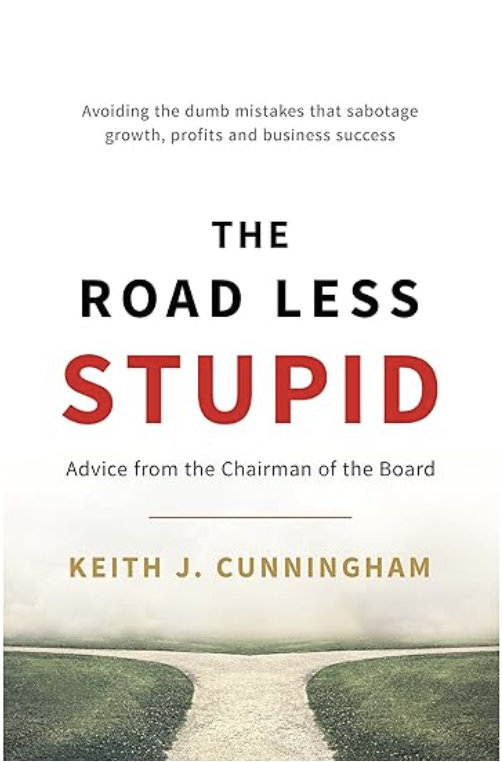 Looking for a thought-provoking read? Check out “The Road Less Stupid” by Keith J. Cunningham. It’s a straightforward guide to quality thinking about crucial business matters. The book starts off by talking about how you set up a time and place for quality thinking but the real value comes in subsequent chapters. Keith Cunningham cleverly poses a series of questions for contemplation on a variety of topics. Chapters can be read independently of the other and in no particular order. It is a great book available on both hardcover and kindle versions (you can read it on your phone, computer and/or tablet). Take notes in your journal, and let the ideas percolate. 3. Write Yourself a Letter from the Future Here’s a simple yet powerful exercise. In your journal, set a date 3 to 5 years ahead and write a letter to yourself. Describe your business and life in vivid detail, as if it’s already happened. Talk about how it’s grown and what you have achieved. Be specific and detailed. It’s a personal exercise meant for your eyes only, but the impact can be profound. (If you don’t believe how powerful this can be, let me tell you about my experience at a future meeting). 4. Craft Your 2024 Plans Let’s talk about planning for the future. Depending on your planning cycle, this could mean a full Annual Operating Plan for 2024 or just a quick update. Check out these handy templates for 90-day Plans and an Annual Operating Plan:
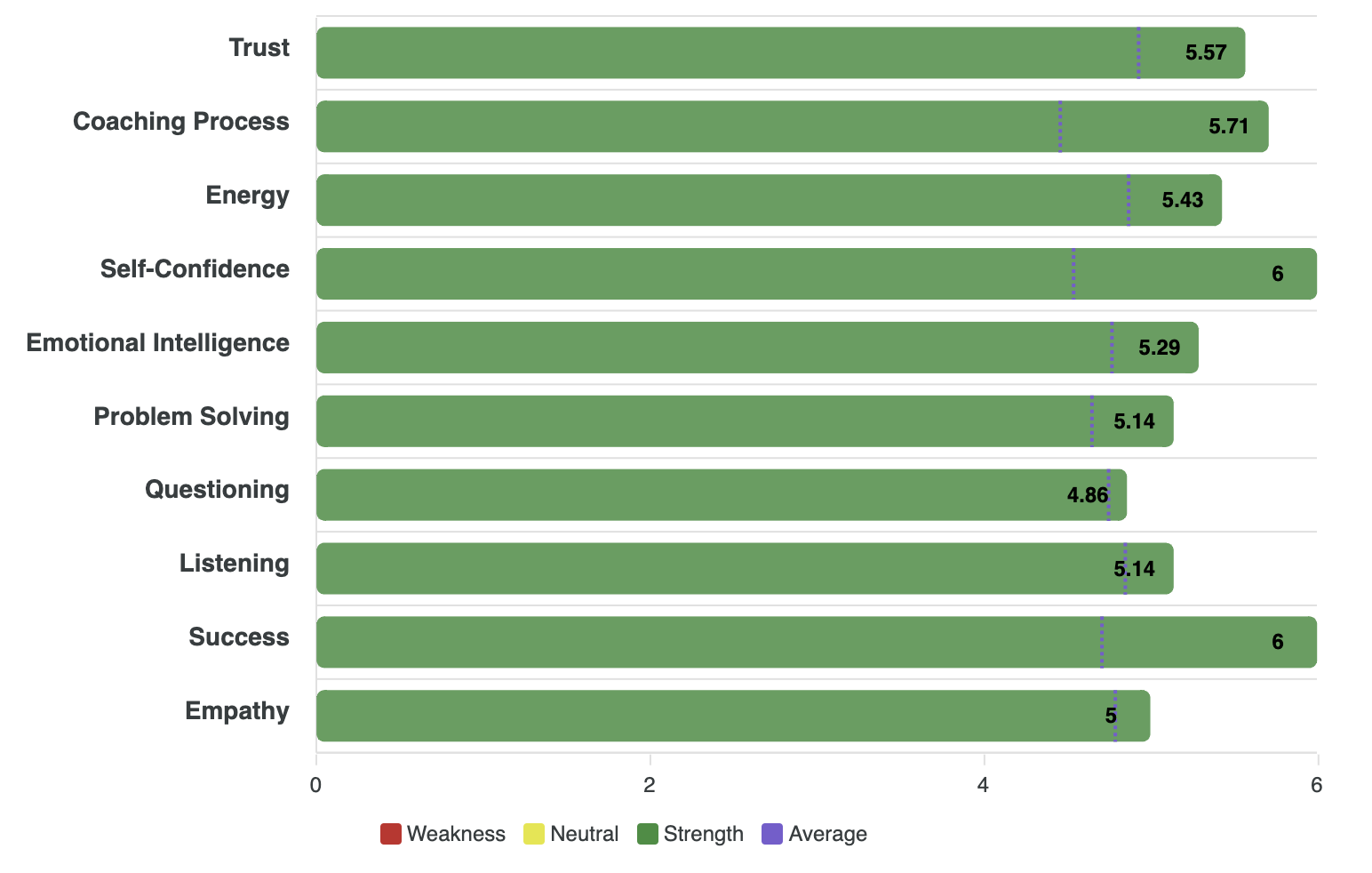 Take a moment to run some diagnostics on various aspects of your business and life by using our free Diagnostics. There are about 20 Diagnostics that cover a range of topics from Growth and Profits to Life Balance. Each uses a similar structure of 25+ questions (no commercially sensitive information provided) to give you a score on 6-10 key factors, highlighting strengths and weaknesses. Assess the results and summarise your thoughts in your Journal. Use them as a foundation for building your 2024 plans.



![[TOOL] Trigger Point Budgets](https://shifft.com.au/wp-content/uploads/15-apr-trigger-point-budgets.jpg)