Find somewhere private.
Choose a quiet place where you will not be interrupted and feel comfortable speaking aloud. Tapping can feel unfamiliar and may bring up emotions. For your first session, avoid a public place or shared office.
SHIFFT RESOURCES · PERSONAL WELLBEING
A practical guide to getting started.
Explore a different way to manage everyday stress.
A guided session, practical advice and resources for you and your team.
A LITTLE SPACE FOR YOURSELF
A difficult conversation. A demanding week. That nagging feeling that you are not doing enough.
Pressure can stay with us long after the moment has passed. EFT tapping is a practice that some people find helpful for easing emotional intensity and feeling more settled.
EFT stands for Emotional Freedom Techniques. It combines gently tapping specific points on your face and upper body with focusing on a feeling, thought or concern. Guided sessions typically include words to repeat while you tap.
You might focus on feeling nervous about an upcoming presentation or frustrated after a difficult conversation. The intention is to acknowledge what you are experiencing and explore whether the exercise helps reduce its emotional intensity. You do not need to pretend everything is fine.
START HERE
The starting point I recommend for clients and their team members. Find somewhere quiet and private before you begin.
MAKE ROOM FOR THE PROCESS
Choose a quiet place where you will not be interrupted and feel comfortable speaking aloud. Tapping can feel unfamiliar and may bring up emotions. For your first session, avoid a public place or shared office.
Try the tapping movements and spoken guidance at a comfortable pace. Give yourself permission to participate without needing to understand every detail immediately.
You might think, “What am I doing?” or “This feels strange.” Approach it with curiosity and give the process your attention. You do not have to believe every explanation to explore how the exercise feels.
If distraction or self-consciousness dominated your first attempt, consider trying again in a more comfortable setting. There is no guaranteed result. A lack of benefit does not mean you have done something wrong.
Rate the intensity of your concern from 0 to 10 before starting and check again afterwards. Notice any change in your feelings, physical tension or perspective. There is no need to force an outcome.
Start with a manageable everyday concern. Pause or stop if you feel overwhelmed. You do not need to push through distress for the exercise to count.
THE BACKGROUND
EFT developed from earlier tapping approaches, including Roger Callahan’s Thought Field Therapy. Gary Craig later developed the simplified approach known as EFT. Nick Ortner and The Tapping Solution have helped introduce tapping to a wider audience.
For an accessible account of this history, listen to episode 108, “Tapping’s Origin Story”, on The Tapping Solution Podcast ↗.
CONTINUE AT YOUR OWN PACE
REWIRED COMPANION RESOURCES
Explore these NotebookLM resources alongside Rewired. Choose the format that suits you.
A video introduction to the biology of tapping.
Watch the videoAn audio discussion exploring clinical tapping and the stress response.
Listen to the audioA visual overview of clinical EFT and the research discussed in these resources.
View the infographicAI-generated summaries created with NotebookLM. Each resource opens in a new tab.
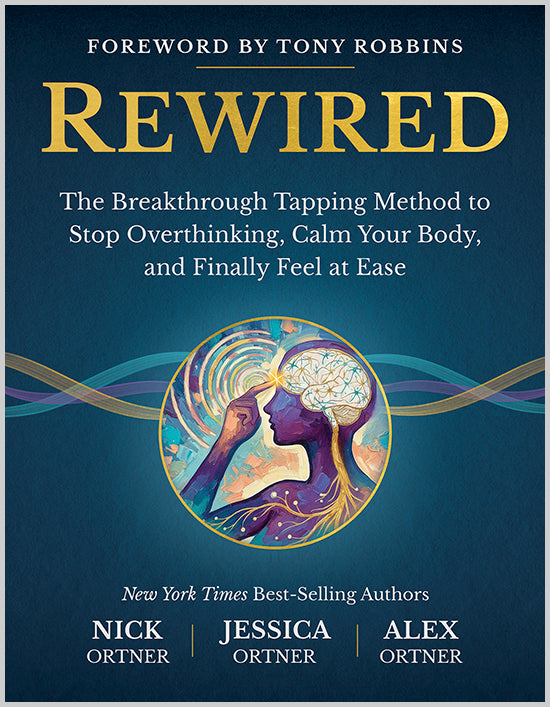
The Breakthrough Tapping Method to Stop Overthinking, Calm Your Body and Finally Feel at Ease.
Explore the authors’ approach through explanations, practical exercises and examples.
Find on Amazon Australia ↗View the publisher’s description ↗Conversations, explanations and guided practices from The Tapping Solution.
Start with episode 108 on tapping’s origins if you are curious about how it developed.
Listen to the podcast ↗Guided sessions on topics such as everyday stress, sleep and self-doubt. Use it on your phone or through a web browser.
Paid content and subscription options are available.
YOUR QUICK REFERENCE
A quiet space.
No interruptions.
Something manageable
from everyday life.
Rate its intensity
from 0 to 10.
Tap gently.
Go at your own pace.
Notice how you feel.
No required result.
Stop, rest or return
another time.
This is an optional personal resource. You do not need to share what you worked on or discuss your response with your manager or colleagues.
Tapping is a complementary wellbeing practice, not a replacement for medical or psychological care. If you are experiencing persistent distress or working through traumatic experiences, seek support from a qualified health professional.