Strategy & execution / Q2 FY27
Build momentum
for Q2 FY27.
Why your next 90-day plan starts now.
As September draws to a close, now is the time to prepare your 90-day plan for Q2 FY27: October to December 2026.
This quarter takes your business to the halfway point of the financial year. The priorities you choose now will influence both your December position and the platform you take into January.
There is also a practical reality. Customer deadlines, Christmas trading, staff leave and shutdown periods can compress the time available. Waiting until October is well underway makes it easier for immediate demands to take control.
But completing the plan is only the beginning.
The real value of 90-day planning is the momentum it creates through consistent action.
That momentum comes from connecting your longer-term direction to clear quarterly outcomes, then keeping those outcomes alive through monthly reviews, weekly commitments and daily priorities.
Start with the bigger picture
Your quarterly plan should sit within a clear planning structure.
Ideally, you already have a strategic plan that sets your direction for the next three to five years. You should also have an Annual Operating Plan for FY27 that translates that direction into the outcomes required by 30 June 2027.
The connection is straightforward:
- Strategic plan: Where do we want the business to be in three to five years?
- Annual Operating Plan: What must we achieve this financial year to move towards that future?
- 90-day plan: What must we achieve this quarter to keep the annual plan moving?
Each level makes the next one more focused.
Suppose your three-year ambition is to build a business that operates successfully without your involvement in every decision. Your annual plan might include developing managers, clarifying responsibilities and improving operating systems.
Your Q2 plan then identifies the next practical steps: delegate specific decisions, introduce a management reporting rhythm and document two critical processes.
Now the quarter has a purpose that everyone can understand.
If your annual plan needs attention, address that first. Our Annual Operating Planning video and template provide a practical starting point.
Use Q1 to make better Q2 decisions
Before deciding what comes next, take an honest look at the quarter just completed.
Where have you made progress? Which commitments remain unfinished? What have you learnt about your customers, your team and your own capacity?
Look beyond whether tasks were completed. Consider whether the work produced the intended result.
You might have launched a marketing campaign without generating enough qualified enquiries. You might have recruited a manager while still retaining every important decision yourself.
Activity and outcomes need separate attention.
Ask your team:
- What moved our annual priorities forward?
- What stalled and why?
- Which assumptions proved inaccurate?
- What should we continue, change or stop?
- What unfinished work still deserves a place in Q2?
Avoid automatically carrying every incomplete action into the next quarter. Some work needs renewed commitment. Other work needs redesigning or removing.
An effective review improves the quality of your next decisions. It also gives the team an opportunity to recognise progress before moving on.
Choose a few outcomes that matter
A useful 90-day plan gives people a manageable set of priorities.
For many businesses, three major priorities are a sensible starting point. The right number depends on the scope of the work and the capacity available alongside normal operations.
These priorities are your Big Rocks: the outcomes that deserve protected attention because they materially advance the annual plan.
Be specific about what success means.
“Improve sales” gives the team little direction. “Introduce a consistent enquiry follow-up process and lift quote conversion from 25% to 30% by quarter end” creates a clearer target.
“Develop the team” is broad. “Train two supervisors to run weekly production meetings independently by 30 November” makes the expected change visible.
For each priority, define:
- The outcome required.
- How you will measure success.
- One person accountable for delivery.
- The key milestones and deadlines.
- The time, support and resources needed.
Our 90-day planning video and instructions and editable 90-day plan template can help you structure this work.
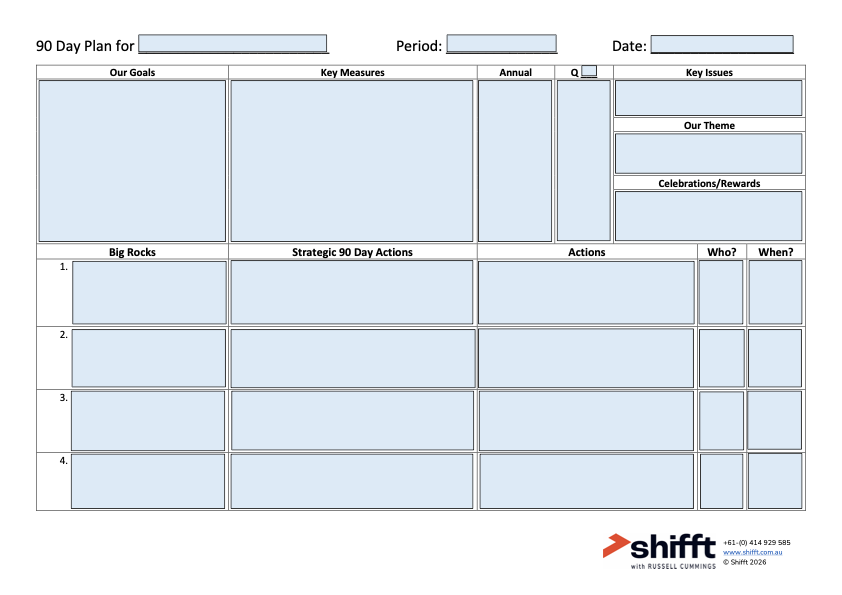
Download the editable 90-day planning template ↗
Plan for the quarter you actually have
October to December deserves a realistic capacity check.
A project that appears achievable across three months may become difficult once you account for leave, customer commitments, peak trading and supplier availability.
Put those constraints into the calendar before committing to deadlines.
If a key manager is away in December, their major implementation work may need to finish in November. If your business faces a Christmas rush, improvements intended to support that rush need to be operating beforehand.
Also consider dependencies. A new reporting process may require better data first. Delegating decisions may require training before responsibility can transfer.
Sequence the work so each step prepares the next.
Leave room for normal business demands and unexpected issues. A plan that consumes every available hour becomes fragile as soon as circumstances change.
Credible commitments help build trust. Repeated overcommitment makes planning feel disconnected from reality.
Build momentum through a regular cadence
Once the plan is agreed, establish the rhythm that will keep it moving.
Cadence is the regular pattern of planning, action and review that builds momentum.
It gives people repeated opportunities to make progress, see results and adjust their approach.
When a priority comes up every week, obstacles become visible sooner. When someone completes a milestone, the team sees evidence that the plan is working. When circumstances change, you can respond while there is still time to influence the result.
Over time, those small cycles strengthen confidence and follow-through.
The 90-day plan provides the overall framework. Monthly, weekly and daily routines turn it into a working system.
Monthly: check progress towards the outcome
At the start of each month, identify what needs to be achieved by month end to keep the quarter on track.
Review results against the quarterly measures. Check milestones, resources and emerging problems.
Ask: “Given where we are today, what needs our attention this month?”
For example, a Q2 priority to improve customer retention might involve reviewing lost accounts in October, testing a follow-up process in November and evaluating the results in December.
Each month advances the same outcome.
Weekly: turn priorities into commitments
Your weekly review connects the plan to immediate action.
Keep the conversation focused:
- What did we commit to last week?
- What was completed?
- What is getting in the way?
- What must happen this week?
- Who needs help or a decision?
Be clear about the next deliverable and its owner.
“Work on the customer process” is difficult to assess. “Complete the draft follow-up checklist and test it with three accounts by Friday” creates a useful commitment.
Use the meeting to resolve obstacles as well as report progress.
Daily: protect time for important work
Daily planning is where personal productivity supports business execution.
Before opening your inbox and responding to everyone else’s priorities, identify the work that will advance your weekly commitments.
Choose a small number of must-do actions. Allocate time for them in your calendar.
You still need to handle customers, operational issues and unexpected demands. However, important work needs a deliberate place in the day.
A protected hour spent improving a critical process can create more lasting value than a day filled entirely with reactive tasks.
Connect your business plan to your personal productivity
Every business priority eventually becomes someone’s responsibility.
For owners and leaders, this creates a practical challenge: how do you keep strategic commitments visible while managing a busy working day?
The connection needs to run all the way through:
Annual priorities → quarterly outcomes → monthly milestones → weekly commitments → daily actions.
Our Focused Execution 90-Day Productivity and Planning Journal supports this process by connecting your 90-day plan with monthly, weekly and daily priorities.
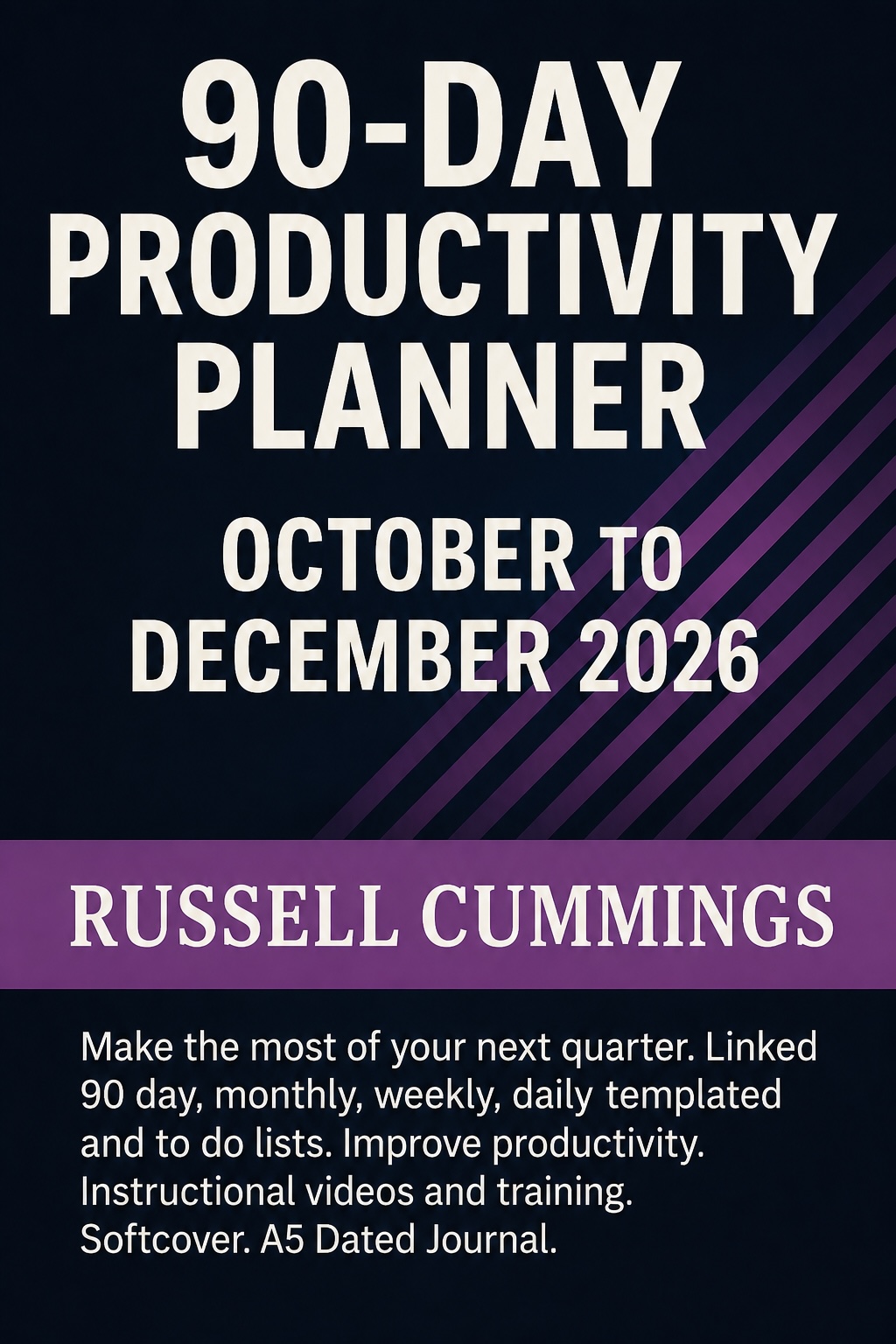
One practical daily companion.The October to December 2026 journal connects your 90-day priorities with monthly, weekly and daily action.
Explore the 90-Day Productivity Planner ↗
Use it as part of your working routine. Keep your priorities visible, schedule the next actions and review what you actually completed.
The journal provides structure. Consistent use turns that structure into a habit.
You can also use our planning and productivity videos for guidance on cascading plans, weekly planning, daily planning and time blocking.
Put the rhythm in place now
Before Q2 begins, book the planning session and schedule the reviews that will support delivery.
Bring your strategic direction, FY27 Annual Operating Plan and Q1 results into the discussion. Agree on the few outcomes that matter most by December. Assign ownership and check that the commitments fit your available capacity.
Then make sure everyone knows what happens in the first week.
Momentum starts with a clear next action. It grows when that action is completed, reviewed and followed by another.
By December, you want to see meaningful progress on the priorities that will shape your business. That requires attention throughout the quarter.
Build your Q2 plan now. Give it a place in your monthly conversations, weekly commitments and daily decisions.
The cadence builds the momentum.