
by Russell Cummings | Apr 22, 2014 | Business Tips
Skills your Business Leaders must have
In order to achieve organisational goals, effective leadership is essential. But how does one become effective? What are the key skills that we require in our leaders? This article will outline 5 important skills that Business Leaders require.
Key Skills
1. Think and Act Strategically – A leader must be able to place the market, economic, business and operational aspects into context and create a plan for the future. Thinking about and acting upon these things strategically is critical to achieve success.
2. Organised and Productive – It is important to lead by example. Therefore, he/she has to have good personal productivity, organisation and time management.
3. Understand the impact of technology – One must understand the impact of technology on the business and how it can be leveraged for commercial advantage.
4. Set the Performance Standards – This relates to creating the desired culture for the Company, individual, and team.
5. Ability to be a Team Player – Creating a strong leadership team – building relationships within and externally to the business – putting team above self.
In relation to these key skills, it is important to highlight that:
• These skills are in addition to any technical skills that might be required and the list is not exhaustive.
• Take note that good leadership is not about being perfect – it is about balance and “walking the talk.”
• You can use these areas to assess individual performance of yourself and the team.
Today, Business Leaders are constantly juggling a range of issues and challenges. These are the skills that help our leaders be effective in a changing environment.
How do you rate yourself? Score yourself on each skill area (out of 10 – where 1 = poor and 10 = excellent) and determine where you might need to focus your personal development. Assess your key leaders against the same criteria.
Where do you need to improve your skills? Add your feedback below.
Russell
Download Skills Assessment Template here

by James Atkins, Vantage Strategy & Marketing | Apr 14, 2014 | Business Tips
One way not to go to unlock innovation is to hold a brainstorm! Or at least to turn up with butchers paper, pens and little else!
You need stimuli and a process to gain insight and inspiration. You need always to be on the look out – innovation happens all around you every day!
Here’s three ways that I found have helped people think about developing innovative products and services:
1) Look at the Edges and Intersection of your Users, Products and Competition
Where are there non standard uses for your products by customer groups you weren’t targeting? How have customers used your products to solve a problem you hadn’t thought of? Which of your customers are they using your competitors products – and for what purpose?
Lead users, those who are early adopters, can be indicators of a broader market opportunity.
2XU, for instance, were able to identify that a small group of non professional sports people were wearing high performance sportswear (that they didn’t need for performance purposes!). They created a new category by making those products widely available at (relatively) lower cost. Add a fashion angle and you not only have weekday joggers wearing
2XU but it’s become acceptable weekend attire.
2) Take a Future Forward view
Take a trend and extend it as far as you can. What trends can you tap into and be ahead of the curve …Social, Environmental, Technological, Political, Regulator.
Back in 2009, Jetstar decided to jump ahead of their competitors by ramping up social media marketing whilst everyone else was dabbling at best. They allocated over 40% of marketing dollars to this segment and got stellar returns in terms of ROI. Seems sensible now but two years ago they were ahead of the curve.
3) Turn your business Upside Down and Inside Out
Change how you look at your Organisation, Staff, Supply Chain, Partners.
My favourite example here is Build-a- Bear. They completely inverted the accepted industry model. Teddy bears are a low cost, low margin, high volume, seasonal, fad based business. They created a business model that was low cost, high margin, moderate volume, all year round and experiential. From one store in the late 90’s they now have over 400.
Interestingly their revenue has flat lined lately – may well be time to turn things upside down and inside out again!
James works with a wide range of organisations from large to small, start up to established. He facilitates planning and strategy workshops, undertakes reviews, develops insights and ideas, and mentors and coaches leaders. As Chair of the Growth Leaders Forum he helps business leaders unlock their potential and chart a path to growth – http://www.vantagemarketing.com.au/
by Matt Heemstra – Cain Ellsworth & Co | Feb 27, 2014 | Business Tips
“People are tired of simple things. They want to be challenged.” – Umberto Eco
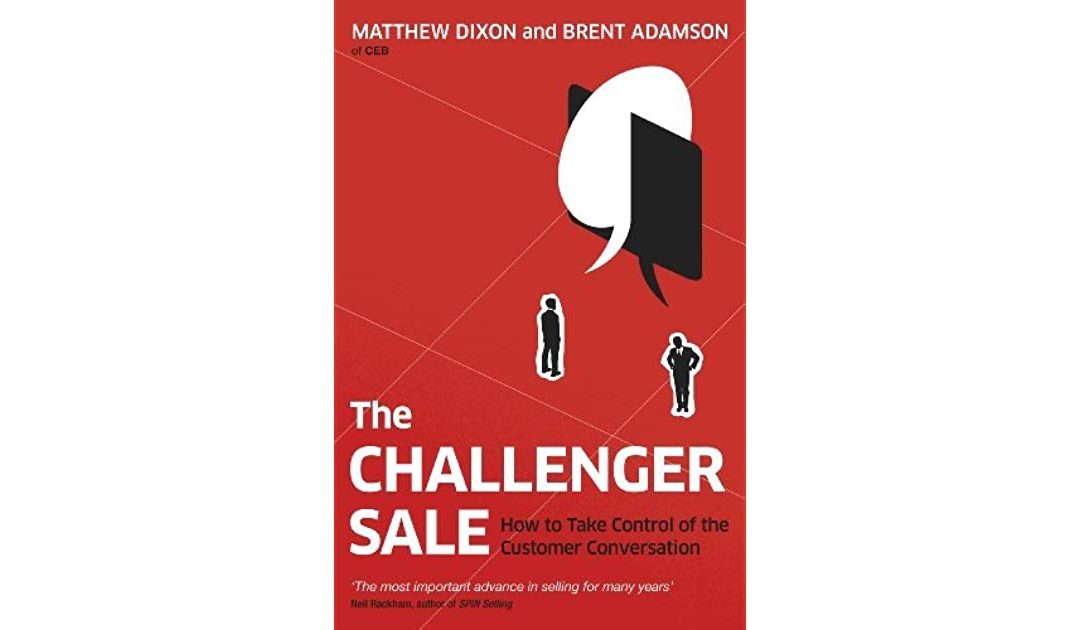
I recently finished reading an interesting book called The Challenger Sale, by Matthew Dixon and Brent Adamson. I’m not big on reading book reviews disguised as blogs, so I’m not going to spend 1000 words talking about the book. I’ll just strongly suggest it to business leaders everywhere. You can read more about it here.
The short version is this: the predominant view of sales success in recent history is that the most successful salespeople are “relationship builders”. I think most of us understand what that means – the kind of people who are good at making friends, that people like being around, that make you feel comfortable, etc. The authors suggest (based on fairly exhaustive research) that while those people are good at making friends, they aren’t so good at making sales. Their theory is that the truly successful salespeople are those who make customers uncomfortable, who ask questions that customers can’t answer, who challenge customers. Those are the salespeople who demonstrate value.
The most interesting part of that theory to me is how that idea relates to leading an organization, beyond just the sales function. How do you lead your people? Are you challenging how they think? Are you making them uncomfortable?
ChangeI’m not suggesting you don’t encourage your people, or develop relationships with them, or that you should try to make them dread going to work. What I’m suggesting is that the status quo is not acceptable. Your organization has to change to thrive – or even survive – over and over again. In order to make that change, people have to be uncomfortable with their current situation. They have to question what they’re doing & how they’re doing it. And that mindset, that constant pushing against the way things are – that has to start with the leaders.
If the leader is OK with the way things are today, all the employees will feel the same way. People will get complacent. Your organization will develop the belief that the way things are now is as good as they can possibly be. Change will be viewed as something to be avoided. And in the world we live in, that’s a death sentence for any business.
How are you leading? Are you challenging your people? Are you pushing them outside their comfort zone? Are you preparing them for a great future – or no future at all?

by James Atkins, Vantage Strategy & Marketing | Feb 20, 2014 | Business Tips, Marketing
This is a conversation I often have with clients. Many businesses take a really narrow view – ‘it’s what we put on our web, print on our brochures or broadcast via our ads’. Effectively what they push out in the hope it will hit their target customer and get them to respond.
Well, yes, that is a part of marketing but it’s not the whole or, I would argue, what truly matters.
If the objective is to positively impact how customers (both current and prospective) think and feel about you then viewing marketing in a traditional sense isn’t going to cut it.
An exercise I get clients to undertake is to map out their touch points or, put another way, the customer journey. Where, when and how do customers interact – from the first time they hear about you, to the physical or online experience, right through to when they pay and beyond.
What is the experience and what impression are they left with? Does it reinforce the value proposition or detract? Is it consistent (at a minimum) or does it truly excite and tell a story about your offer?
It is the sum of these experiences that impacts your brand and its potential for growth.
And, of course, everyone in the organisation touches customers in this way. At each point of the customer journey everyone has the potential to impact on the customer experience and thus the brand perception.
This means, therefore, that marketing delivery goes well beyond the marketing department.
So marketing is, in effect, what we all do each and every day… much more than a brochure or a website!
James works with a wide range of organisations from large to small, start up to established. He facilitates planning and strategy workshops, undertakes reviews, develops insights and ideas, and mentors and coaches leaders. As Chair of the Growth Leaders Forum he helps business leaders unlock their potential and chart a path to growth – http://www.vantagemarketing.com.au/

by James Atkins, Vantage Strategy & Marketing | Jan 29, 2014 | Business Tips
With over 3,000 commercial messages served up to an individual every day it’s no wonder people feel overwhelmed with choice. Add to that an economy under stress, and brands desperately trying to be heard, and you have a recipe for confusion and customer switch off.
Effective marketing helps customers solve problems and, in so doing, cut through the clutter.
The answer? Marketing needs to move from being a monologue to a dialogue.
And dialogues are based on exchanges of information, or content, based on value to each party.
Content should be the new currency of marketing and those that deliver it effectively will engage their customers.
John Jantsch in The Referral Engine touches on what he calls the 4C’s Marketing as a new way of thinking. He is spot on.
Context, Connection, Content and Community, whilst they may not exactly replace the 4P’s, they certainly give them a run for their money! Here’s a brief overview from my perspective:
Context– Customers are looking to make sense of the explosion of data and information served up, in part, by the digital revolution. Truly understanding a customer’s life, their pressures and problems is a huge contextual opportunity. Situating your brand and its competitive advantage in a relevant, engaging manner is a core tactic of the future. But only if you truly understand the context.
Connection – Technology has increased the ability to connect but it’s how you balance so called ‘high tech’ connections with ‘high touch’ engagement that is key. Linking and informing what you learn online with how you behave and engage face to face will be a winning strategy.
Contentt – We have more than enough content! Your inbox is testament to that! Content can be the new currency for marketing. But only if it is authentic and genuine to your brand and business. Developed, curated, edited and remixed. Tailored to real problems. Delivered how your customer wants – face to face, email, blog, twitter, brochure, advertisements. If you understand the customer context then you can deliver content in a way that truly engages.
Community – Communities are built on shared interests and passions. The question you have to ask is does your business have a crowd or are you building a community? How do you motivate and connect your customers – either as a whole or, preferably, by sensible interest based groups. Effective communities around your business enable you to grow and develop.
Thinking about your business from the perspective of the 4C’s will throw up some interesting challenges to how you approach your marketing. It may just engage your customers in a dialogue… and that’s exciting!
James works with a wide range of organisations from large to small, start up to established. He facilitates planning and strategy workshops, undertakes reviews, develops insights and ideas, and mentors and coaches leaders. As Chair of the Growth Leaders Forum he helps business leaders unlock their potential and chart a path to growth – http://www.vantagemarketing.com.au/

by Russell Cummings | Dec 6, 2013 | Business Tips
As I am essentially a “One Man Band” with some external support, I am always on the lookout for how I can use technology to improve my productivity.
I’ve focused on some key areas that I know work for me:
• Reduce travel
• Reduce document preparation time
• Improve your concentration
1. Reduce travel time and/or improve the quality of telephone communication
For many of us travel is a big challenge as it can consume a large part of the available day. My motto with flying is “Time to spare – go by air!”. So how can we reduce the amount of travel we do?
You can make more phone calls, but the quality of interaction is usually much less than a face-to-face chat.
I’ve found that there is a compromise that allows you to reduce travel and improves the quality of remote communications – Video Conferencing.
A few years ago,systems and speed were inadequate without dedicated hardware but now, you can use the power of the internet faster and mobile broadband to improve this communication.
Video Conferencing Solutions: These abound are available on most of the devices that we use in business – desktops, laptops, tablets and smartphones. The ability to quickly video conference from your phone or iPad is a very handy feature and the quality is excellent.
• Skype.com – Skype is the most common solution as its free and available on most devices, however regular users will complain of a high level of drop outs and poor quality.
• VSee.com – I’ve recently started using another solution VSeewhich appears to have a lower bandwidth requirement and has a very easy screen sharing feature so you can make your calls really interactive. Its also free and has IOS apps as well as a desktop application.
• GoToMeeting.com – GTM is a geat tool for when you have more than 3 or 4 people to participate in the call as it will handle up to 25 attendees and has great webcam and screen sharing. The other big advantage is that you can record your sessions for future reference. More than 25 people and you can use GotoWebinar.com. Both these services are premium services so you pay a monthly fee for access and they have mobile versions for your phone and/or tablet.
• FaceTime – IOS users can also use FacetTime, an Apple product, to have a one-on-one video chat. It has the advantage of tracking the person down on a range of devices. It is also free as long as you have an internet or Wifi connection.
2. Reduce your time preparing memos, instructions and providing feedback
I find that email can consume an enormous amount of time when preparing a document as we need to check spelling, grammar and make sure that we have actually conveyed a clear concise message.
For many tasks, not all, there is a simple, quick and effective solution – video or voice memos. A short message is quick and easy to produce and can contain far more information than an email and can be instantly emailed or transferred from your device to the appropriate people.
I need to thank Will Abbott in the UK for sending me regular coaching updates via video for opening my eyes to the power of this simple tool.
So, if you can’t make an important internal meeting where you need to make a report. Video record it and send it in.
 Video and Voice Recorders – Given our access to computers, tables and smartphones it is reasonable to expect that you will have a plethora of devices at your fingertips for this task.
• Smartphones & Tablets – depending on your preference for operating systems there are plenty of tools to assist you here. As an IOS/Apple User, I use the Camera app on my portable devices for short video messages. For voice notes, I use the Voice Memo app on my iPhone. There are equivalent apps for use on Windows and Android devices. The advantage of using these devices are that they are portable and you can use them to take video in the field to illustrate real problems and issues, which improves understanding.
• Desktops – As a Mac User, for short video messages I use Photo Booth and I believe that Webcam 7 is a good Windows option. For longer more complex messages and updates where I might want to include screenshots or PPT presentations, I use Camtasia (both Windows and Mac versions) and I also believe that Screenflow is very good.
• Evernote.com – Evernote is a great tool for disseminating your video and voice memos. You can record audio and camera images directly in Evernote and you add text and video to notes as required. The beauty of using Evernote is that you can instantly share these notes via email or you can share the entire Notebook automatically as they sync to all devices and can shared with multiple people. Every note is also available on all your devices: web, desktop, tablet and smartphone.
3. Reduce your time typing up meeting notes
Too often we need a copy of our meeting notes that we can share with others. I see that there are 2 options here: transcribing your notes or sending them out electronically. Remember: many reporting functions do not require a typed report and a handwritten facsimile is often good enough. Decide and agree what is required in advance.
Electronic handwriting images: There are many options here. The first thing you need to do is understand that other people reading your handwriting is an eventuality. This will help you to focus on writing legibly and structuring the layout to make in comprehensible. The tools that I use here are:
• Livescribe Pen – www.livescribe.com – this is a smart electronic pen that captures your handwriting and can also record audio as you go. Depending on the version you get, the images sync with Evernote for recall and distribution. You need to use their notebooks and stationery but this is not onerous and is relatively inexpensive.
• Photos – you can simply take a photo of your pages and send them via email. I mainly use the Camera app in Evernote for this function as it compiles all my pages into one Note.However, I also use the Camera app on my iPhone but also use Scan-2-PDF app (IOS) to create a PDF. If I am taking notes from a whiteboard I always use the Whiteboard Capture Pro app on my iPhone. It is excellent.
• iPad– for notetaking on my iPad, I use a special stylus – AdonitJotpro – and the Penultimate app which also syncs with Evernote – a great combination. However, for annotating PDF documents for review, I use the Goodnotes app. I am not aware of similar products for other tablets.
Transcription Solutions – there are a limited number of solutions that will either transcribe your handwritten notes to text or will transcribe your voice to text, even from recordings. You can train some of them to learn your voice and handwriting. You can also use a transcription service and there are many of these on the web or through freelancer.com or similar sites.
• Handwriting transcription: I do not currently use any of these services. Most of the newer programs centrearound transcribing from your iPad. Writepad app gets lots of good reviews.
• Voice to text transcription: Again, I no longer use any of these apps but have used Dragon in the past. It is very popular and now has a range of options and learns your speech patterns so accuracy is good. You can also use Google Voice, which is especially good on Android phones.
4. Reduce your time collaborating on documents with colleagues
It is really easy to waste a lot of time and energy when collaborating on documents with colleagues. You waste time emailing versions around and collating feedback from lots of people. The solution is to use a familiar tool that is purpose built for live collaboration.
• Google Drive – (previously Google Docs) is an online suite of document tools that most of use are familiar with: Word processor, Spreadsheet and Presentations. The difference is that Google Docs are completely on-line and allow for real time “live” collaboration with multiple users. You decide who has access and you even restrict access to “View only”. So, no messing about with versions – it all happens live and onscreen. Best of all – it’s free.
5. Reduce your time compiling travel itineraries and checking on flights
As a frequent traveller, one of the frustrating things with the modern world (where it is so easy and convenient to book your own travel) is checking and compiling your itineraries for flights, accommodation, car hire, etc.
The best solution I have found for this is Tripit.com. This is a great service that masquer ades as an app (web, IOS, Blackberry, Windows and Android).
Tripit collates all your travel details by scanning your Inboxes and extracting the details from your confirmation emails (provided your supplier uses a recognized standard for this – most airlines, major hotels and car hire companies use the standard). I usually have to add a few hotels and services apartments manually.
Tripit then automatically compiles your travel into “trips” (based on dates), which you can then manage. This is a simple process and allows you to see your booking sequentially (and find errors). Tripit Pro will also keep you up to date with flight delays, directions and maps, etc.
You can easily share your Trips with interested parties, spouse, colleagues, etc. It is a great app.
6. Maintain concentration on the task at hand
As I mentioned in the Productivity webinar, there is neat trick for improving your time management. It involves using a “count down” timer to keep you focused on the task. It is much more powerful that I could have imagined.
I have found that setting a count down timer for 25 minutes (followed by at least a 5 minute break for emails, phone, etc) does the following:
• It keeps me focused on the task with a sense of urgency. There’s nothing like that “ticking clock” to maintain the focus.
• I am not as distracted by phone calls, emails, unexpected visitors, etc as I know I can back to them in x minutes (when the timer has run out).
So where can you find a timer?
• Smartphone – most smartphones have a clock app, which includes a countdown timer. My iPhone and iPad have one. Set it up in a prominent place and let it loose.
• Pomodoro timer – On task management website, kanbanflow.com there is an app called the “Pomodoro Timer”. This is a great timer and it’s where I started first using the technique.
There you have my Top 6 time saving tools and apps for improving your productivity.
What are the tips you have for saving time with technology?
Russ
