If you want to apply some innovative thinking in your business, the “7Rs of Innovation” is a framework in which you can work in with 7 key areas to think about.
1. RETHINK
The first step in innovative thinking is that you ALWAYS need to rethink things. You need to continuously be thinking about how you can do things differently. Remember, this should be a constant process.
2. RECONFIGURE
Then you need to think about how you can reconfigure things especially in low-value or waste activities. How can you restructure things to make your business become more efficient, more effective, and more innovative? In this step, consider the following:
How can this activity be eliminated?
How can common activities be consolidated?
How can reconciliation be reduced by putting quality at the source?
How can information sharing with suppliers and customers improve the process?
How can intermediaries and non-value-added work be eliminated?
How can best practices from other industries be borrowed and improved upon?
3. RESEQUENCE
In this step, think about how you can resequence your business processes in a more parallel or efficient way when time compression is crucial.
How can predicting increase efficiency?
How can postponement increase flexibility?
How can parallelism reduce time?
How can the number of interconnections and dependencies be minimised?
4. RELOCATE
Apply this step when activities require a high level of teamwork or collaboration i.e. when distance from customer or supplier has introduced delay, miscommunication or error. Consider the following:
How can the activity be moved closer to the customer or supplier to improve effectiveness?
How can the activity be moved closer to related activities to improve communication?
How can we decrease cycle time by reducing travel time and distance?
How can geographically virtual organisations be created?
5. REDUCE
Apply when higher accuracy is needed, or critical resources are performing non-value added or waste work. What could you reduce in your process to be innovative? Can you reduce inputs, manpower? For example, you could reduce product quality even to get back to a price point where you’re competitive.
How can the frequency of the activity be reduced or increased?
How would more information enable greater effectiveness?
How would less information or fewer controls simplify and improve efficiency?
How can critical resources be used more effectively?
6. REASSIGN
Reassess your business. Do you have the right people doing the right jobs? Do you have the right companies, organisations doing the right jobs? Think about reassigning things to get improved outcomes.
How can existing activities and decisions be moved to a different organisation?
How can the activity be outsourced?
How can the customer perform this activity?
How can the organisation perform an activity that the customer is already performing?
How can cross-training integrate and compress tasks?
How can suppliers/partners perform this activity?
7. RETOOL
And lastly, in this globally competitive business environment, it is crucial to think about how you can use technology to drive change in your business. How could you retool or reskill your people? Consider multiskilling, cross-skilling to get your business to an innovative level.
How can technology transform the process?
How can the activity be automated?
How can assets or competencies be leveraged to create competitive advantage?
How can up-skilling, down-skilling, or multi-skilling improve the process?
Use the 7Rs as a framework to stimulate some innovative thinking in your business.
To fully understand the 7Rs process, download the sheet here and use it in detail as a guide to improve and apply innovative thinking in your business.
For more strategic and innovative ideas, check out our other resources – videos, diagnostics, webinars, etc. – on this website to help you grow your business and take it to the next level.
The term “Family business ” usually refers to a small or mid-sized company that has a local focus and is plagued with a familiar set of dilemmas such as succession. In spite of that very simple description, family businesses have played a powerful role in the world economy and have included, through the years, big businesses worldwide. Some examples in Australia of successful family businesses are linFox, smorgon group, cooper’s brewery and there are plenty of others.
Most of the time, the key to success of a family business lies in its unique ownership structure that allows them to plan and thrive in the long-term. But other researchers believe that it is also this structure that causes many of them to fall. So what’s really the case?
In a recent article from Harvard Business Review, What You Can Learn from Family Business by Kachaner, Stalk and Bloch, presented a rigorous analysis of how family businesses and non-family controlled businesses differ in management and performance.
And from this article, we’ve derived seven points on how family-run businesses manage for resiliency and how business managers can benefit from these principles.
1.Family business is frugal in good and bad times.
In most cases, family businesses view their money as “the family’s money” which is why they often do a better job of keeping expenses under control. This can be a weakness as often, to save a buck, they invest with shorter timeframes in mind rather than thinking of the long term.
2.a family business keeps their bar high for cAPEX.
Family-run firms have a simple rule when it comes to capital expenditures – they make sure they do not spend more than they earn. They often run “leaner” than their corporate cousins.
3.a family business has little debt.
Family businesses, because of their close-knit and simple structure usually associate debt with fragility and risk, and tend to avoid it. They usually have very strong balance sheets.
4.Family business make few and small acquisitions.
Although an acquisition can transform a company and pay large rewards, it can carry a high risk. And this is why family businesses shy away from large acquisitions and prefer to make few of these deals and only favor companies that are close to the core of their existing businesses.
5.a family business is diversified.
In this day and age, diversification is important to keep a business alive and it is no different with a family-run business. Diversification has become one of the key ways to protect family wealth. In fact, the Smorgon Group in Australia is an example of a diversified family business that went from meat to steel, and paper.
6.a family business is more international.
Contrary to what most people know, family businesses are ambitious about expanding overseas. In fact, they often generate more sales out of the country (USA) than other businesses do.
7.a family business is better at keeping talent.
Businesses that are family-owned prefer to extol the benefits of longer employee tenures thus creating a stronger culture.
With these seven points, we can conclude that despite its small and simple structure, family businesses have shown to be resilient in times of economic uncertainty. I think this is largely driven by a strong sense of ownership of the brand and finances. Yes, they are not without pitfalls, the largest being inter-generational transfer but they survive through the years by focusing more on resilience than performance.
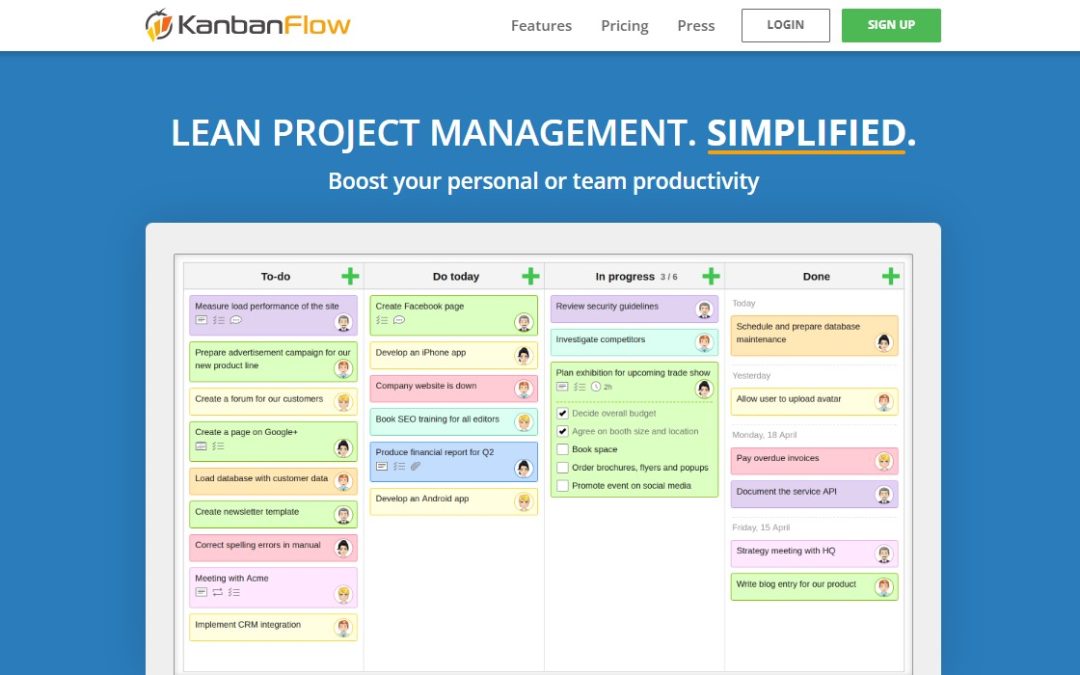
If you find yourself overwhelmed with all of the stuff you need to do, here’s a great productivity tool I found on the web that can help you get organized easily.
This tool is called the KanBan Flow tool which you can find onwww.kanbanflow.com. It is web-based and also has a version that you can download to your iPhone, iPad or Android devices so it’s with you wherever you go.
The KanBan Flow tool is a web-based board that gives you an excellent overview of your current work situation. It is divided into four columns – To-do, Do today, In progress and Done so you can easily monitor which things you worked on, you should be working on and what’s coming up. You can also have other people linked into your KanBan board.
Aside from the fact that it’s a productivity tool, what I like about this is that it’s visual, you can use color to mark and organize things, and simply drag and drop things to where you want them to be.
Learn more about this tool with my personal review. watch the video.
The flipside of “success” is “failure” and it’s the latter that every business owner and manager strive hard to avoid. By definition, the term “business failure” refers to the cessation of a company’s operations following its inability to generate enough revenue to cover expenses without adequate reserves.
In the recent times, there are many examples of strong businesses that have failed to adjust to the changing markets and economic times or to take advantage of opportunities – and this has ultimately led to their downfall.
Based on my 26 years experience working closely with business owners, here are my 9 key tips to avoiding business failure:
1. always ensure that you target your marketing.
Too many businesses have an undifferentiated product/service offering and fail to understand who their target customer is and what they require. Don’t be undifferentiated, make sure you’re speaking the right language and using the right channels and/or media in targeting your main group of consumers. Focus on delivering exceptional value. ACTION:Develop a structured Marketing Plan for your business and revise it regularly.
2. always plan ahead.
Talk about what you want to do next and where you’d want your business to go by preparing strategies that will help you focus on your business goals and objectives and to make sure that appropriate and sufficient resources are in place. Be rigorous in your planning and hold yourself and your Team accountable. ACTION:Develop a 5-year Strategic Plan supported by Annual Plans. Have 90 Days Actions. Cascade your plans so that everyone in your business is part of a plan.
3. have great business models.
It is a fact that most businesses fail because of poor business models – a business model describes you will engage your target market to profitably generate revenue. To avoid this, make sure that you have great and well-thought pricing models and economic cost models that will help your business focus more on creating, delivering and capturing value needed by your customers. ACTION:Understand your Business Model – there are some great tools to do this.
4. have effective processes.
All businesses are driven by processes. However, few businesses have well documented processes. Many businesses fail to have any continuous improvement processes and have a well entrenched view that they are already efficient. The reality is far from this and many businesses can improve productivity by up to 30%. The challenge is to avoid waste in: time, resources, opportunities, materials, etc. caused by inefficiency – this results in higher than necessary costs and lower margins. ACTION:Apply simple Process Improvement Tools, like 7 Wastes to your business on a regular basis. Never stop searching for improvement.
5. engage your team.
As a leader, you should be a good example to your team. Teach them how to own issues, take responsibility, be accountable and model proper engagement, not only with their customers and clients, but also with each other. An effective team will overcome most business obstacles and enable your business to seize opportunity, when required. ACTION:Engage your Team by improving communication and feedback.
6. have great sales processes.
Sales is the engine that drives your business. Most businesses that fail do not have effective sales processes in place. So with that said, make sure you have great processes that your salespeople can follow. ACTION:Clearly define your Sales Pipeline and develop a Sales Model that delivers.
7. ensure you have adequate cash buffers.
“Cash is fact – Profit is opinion!” This great quote from Andrew Russo (Master Accountant) gets straight to the heart of the matter. Ensure you build adequate cash reserves in your business to ride out changing markets and economic conditions. Cash reserves also allow you fantastic flexibility when looking at opportunities. ACTION:Develop a plan for how you can build cash reserves in your business. Engage your Coach or Accountant in this process.
8. avoide uncontrolled growth.
Uncontrolled growth is often a pre-cursor to business failure. When business growth is “out of control” often cash flow is uncontrolled. Rising sales are barely enough to cover rising costs and cash is at a premium. Cash flow, staff, customers and production are all stretched often to breaking point. Avoid this by “taking your foot off the accelerator” – be more discerning in taking on clients – engage strategies that will slow demand (like lift your prices) – say “No” to opportunities that aren’t in your sweetspot – and introduce tighter financial controls and KPI’s. ACTION:Monitor key drivers in your business and ensure that you have the capability to meet demand. Develop strategies to maintain control.
9. take early action.
Too many businesses fail to “take effective action” until it is too late. Act early and avoid the Receivers! Set up effective monitoring systems. Plan for different scenarios (revenue, cost. Market conditions, competition, etc) and define “trigger points” – bank balance, sales$, profit %, market KPIs, etc – that will cause you to evaluate your options well in advance. These options should include plans for how you will address the challenge – reduce staff numbers, cut costs, close non-performing divisions/products, etc. Make these decisions now rather than trying to make them when under pressure. aCTION:Develop plans to address particular scenarios with effective trigger points.
Focus on ensuring that you have all 9 elements covered and you will do more than stave off failure you will be on the road to success.
What is the element that has the highest priority for you? Pick one and start working on it now.
I recently posted about an interesting ad campaign from Canada using Porsches in a wealthy suburb in Toronto. Let’s expand on this concept of really understanding your target market and personalising your approach to them.
In the video, the advertising agency Lowe Roche in Toronto Canada thought of a way to make advertising more direct and more personal for client – Pfaff Porsche. They drove the Porsche to a neighborhood of affluent families in Toronto (which was their target market), parked the Porsche in driveways and took photos.
After the pictures were taken, the team from the advertising agency produced tailored marketing pieces for each address using mobile printers. They then distributed the print outs and the residents of the neighborhood received a personalized direct mail piece.
From this creative and very unique campaign, 32% of people responded to a website where they booked a test drive. For Pfaff Porsche, this ad campaign was very successful.
But this type of campaign isn’t completely new. In fact, an advertising agency for an auto company in the Netherlands has also utilised this type of campaign and has successfully tailored their marketing strategy to their customers.
They started using street view images about a year ago in their direct mails and the response has averaged about 63% leading to a 13% increase in sales from a single direct mail. They sent 1000 direct mails and sold 130 brand new cars in one dealership. This is a sensational response!
Now, with this type of personal and direct campaign so successful, how can we expand this beyond cars? How can we apply the same principles to other products and services? Some concepts are:
For fashion, the tailored marketing strategy would be to Photoshop different clothes onto client photos. Companies could make this work by allowing people subscribe to a service where they view themselves in different clothes and accessories. The business can also send them “an outfit” once per month. You could also do something similar for sporting apparel, ski wear, sunglasses, etc?
For Real Estate, the personal approach would be presenting views of the customer and his family in their new home. Or even having a “Sold” sign superimposed over the street view of their house.
For Roofing businesses, the direct strategy would be showing customers what their house would look like with a different colour and style of roof.
But if you can’t use this type of marketing strategy in promotion, maybe you can use it to personalise a product.
Bundaberg Brewed Drinks has done this with their “personalised label” offer where you can create your own product labels using your own photos. It is also available through their iPhone apps.
What can you do to tailor your marketing to a clearly defined target market?
We are in a highly competitive world where consumers are constantly bombarded with information and advertising. You need to make your promotions cut through the clutter.
Maybe using a highly tailored approach to directly target or link your brand to the consumer is an option you should be considering?
The process of searching for a VA for your business is fairly easy (it worked well for me!) and is similar to recruiting an assistant locally. The only difference is that 100% of the process is done online – tests or surveys are conducted electronically and candidates are interviewed via VOIP services like Skype.
My Personal Hiring Experience
I found my VA via www.OnlineJobs.ph, an outsourcing website that offers foreign employers to post job openings and search among thousands of Filipino applicants for the perfect person to fill the post.
For sites like these, you will need to register yourself as an employer before you can post a job offer and get access to thousands of resumes in their database.
After registering and posting your offer, you can either wait for applicants to contact you and send in their resumes (via your contact email) or go through thousands of resumes yourself. I received at least 50 or more emails when I was searching for a VA.
As for my hiring process, the basic structure was:
1. Develop a Role Profile or Job Description – be clear on the qualities you are looking for. I was keen on finding someone with great English writing skills and I culled applicants very heavily on their written responses.
2. Advertise on www.OnlineJobs.ph or similar sites such as www.Freelancer.com, www.VWorker.com, www.Odesk.com
3. Have some simple criteria to sort through applicants on the first pass. Use templates – one for “Thanks but no thanks,” the other for “Congratulations the next step is…” This step reduced applicants from 50 to 20 for me.
4. Get people to demonstrate their abilities with some simple tests. I asked the remaining 20 applicants to do some tasks for me – transcribe my handwriting into one of my templates, read a newspaper article and write me a short blog from it, and provide me examples of their previous work. This step reduced applicants from 20 to 10, with 3 exceptional prospects.
5.Conduct a Skype interview with the Final 3. My current VA, Rai, was actually my top choice, and after the interview I knew she was the one I wanted to hire and so I didn’t bother to interview the other 2.
6. Prepare and have your selected VA sign a Confidentiality Agreement, then you’re good to go.
If you think my process is too much to handle – don’t fret! There are other ways to find and hire a Virtual Assistant.
You can actually work with a virtual staff agency to outsource the process of finding an outsourced worker.
Two sites that provide such services are www.virtualstafffinder.com and www.prialto.com where you are automatically paired with a qualified VA that best meets your needs.
Having a VA works well for me, just like I said in my previous blog and I highly recommend it to any business owner who needs assistance with work-related stuff. So if you think you could use a little help right now, go online, register in one or two outsourcing sites or virtual staff agencies and find yourself a credible, hardworking Virtual Assistant that will ultimately make work become a little easier.