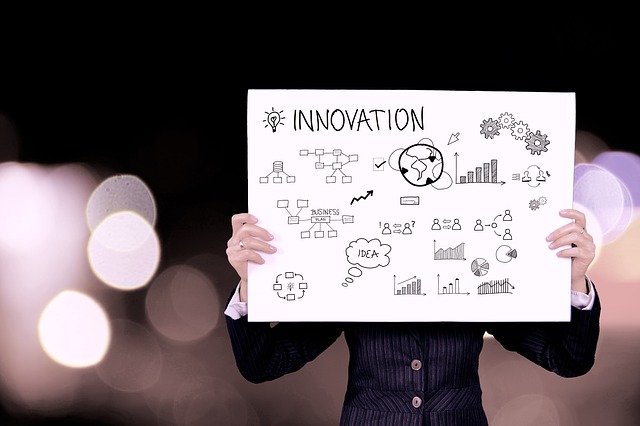
Three Ways To Unlock Innovation

Three Ways To Unlock Innovation

One way not to go to unlock innovation is to hold a brainstorm! Or at least to turn up with butchers paper, pens and little else!

You need stimuli and a process to gain insight and inspiration. You need always to be on the look out – innovation happens all around you every day!

Here’s three ways that I found have helped people think about developing innovative products and services:

1) Look at the Edges and Intersection of your Users, Products and Competition
Where are there non standard uses for your products by customer groups you weren’t targeting? How have customers used your products to solve a problem you hadn’t thought of? Which of your customers are they using your competitors products – and for what purpose?

Lead users, those who are early adopters, can be indicators of a broader market opportunity.

2XU, for instance, were able to identify that a small group of non professional sports people were wearing high performance sportswear (that they didn’t need for performance purposes!). They created a new category by making those products widely available at (relatively) lower cost. Add a fashion angle and you not only have weekday joggers wearing

2XU but it’s become acceptable weekend attire.

2) Take a Future Forward view
Take a trend and extend it as far as you can. What trends can you tap into and be ahead of the curve …Social, Environmental, Technological, Political, Regulator.

Back in 2009, Jetstar decided to jump ahead of their competitors by ramping up social media marketing whilst everyone else was dabbling at best. They allocated over 40% of marketing dollars to this segment and got stellar returns in terms of ROI. Seems sensible now but two years ago they were ahead of the curve.

3) Turn your business Upside Down and Inside Out
Change how you look at your Organisation, Staff, Supply Chain, Partners.
My favourite example here is Build-a- Bear. They completely inverted the accepted industry model. Teddy bears are a low cost, low margin, high volume, seasonal, fad based business. They created a business model that was low cost, high margin, moderate volume, all year round and experiential. From one store in the late 90’s they now have over 400.
Interestingly their revenue has flat lined lately – may well be time to turn things upside down and inside out again!

James works with a wide range of organisations from large to small, start up to established. He facilitates planning and strategy workshops, undertakes reviews, develops insights and ideas, and mentors and coaches leaders. As Chair of the Growth Leaders Forum he helps business leaders unlock their potential and chart a path to growth – http://www.vantagemarketing.com.au/

Developing our Leaders to Manage Chaos

Developing our Leaders to Manage Chaos

In this article, I just want to talk to you about some recent changes we’re noticing in developing leaders in very chaotic environments.
The Current Business Environment

There’s a new term being used called VUCA to describe the current highly complex, business environments. It’s a term previously used by the U.S. Military around the complex environments in Iraq and Afghanistan, and it’s currently being adopted by business leaders around the world to describe what’s happening in their current business environment.

What is VUCA?

VUCA stands for Volatile, Uncertain, Complex and Ambiguous. Change happens rapidly and on a very large scale. Things are very volatile and they’re also uncertain so the future cannot be predicted with any precision, and so we’ve got this volatility, uncertainty combined with complexity.

Challenges are complicated by many factors and there are a few simple causes or solutions. We’ve got this volatile, uncertain, complex environment that’s also ambiguous. There’s little clarity on what events mean and what effect they may have in the future.

We’ve got this complex VUCA environment that most of our businesses are starting to deal in and there’s some evidence to suggest that it’s going to continue for quite a while.

What does this mean in terms of our ability and the tools available for us to develop our business leaders?

If we talk about leadership development models, there are probably two clear models. One is what we call “horizontal development” and the second one is “vertical development”.

What is horizontal development?

Horizontal development is most useful when a problem is clearly defined or there is known techniques for solving it. We’re talking about traditional training for things like routine surgery, engineering, maintenance, bookkeeping, those sorts of things and many others where there is a well-defined skillset and it’s easier to find people.

It’s very outcome-focused and a lot of the “Certificate 4” training in Australia is built around this horizontal learning.

What is vertical development?

What we’re finding though in a VUCA environment, it’s really important that our business leaders have vertical skills. These are the skills to plan, problem solve and allow us to evolve our leadership management abilities to make sense of this very complex world. They are about collaboration. Coaching and “soft skills”.

We get these vertical skills through applied learning and then by pushing through hurdles and barriers that enable us to learn from the application of these things. It’s about providing skills that are adaptable, collaborative, create problem solvers and good planners, and creating leaders that are very self-aware.

Vertical training is all about giving them the tools to deal with this VUCA environment, if you will. It’s about a different training.

Next Steps

It raises a couple a questions for me – where is your business development currently focused? Horizontally or vertically?

Many companies that I talk to are very horizontally-focused still and we need to spend more time on giving our people and our leaders the skills and the tools to vertically-challenged.

You need to understand where it needs to be focused in your business and make sure there’s a balance between horizontal skills-based training and vertical training which is about aptitude and giving people the freedom and the flexibility to solve problems in a very complex world.

Our belief is that vertical development of business leaders is really important. We also see it as an ongoing process of training, applied learning so applying the tools and processes to real problems in your business and learning from those outcomes, about collaboration as teams and about sharing your best practice across your organization.

For more information on how we approach this and what some of our thoughts are, please visit which is www.sbdbusiness.com.au and watch a short video on business leaders which explains this in a bit more detail.

Management is Not Leadership

Management is Not Leadership

In today’s business world, most businesses are run by very competent people who are not necessarily the world’s best leaders. Most leaders are not Ghandi or Nelson Mandela but in my years of experience as a business consultant, I have observed that successful businesses seem to have a leadership team that as a group exhibits all the characteristics of a great leader. Very rarely do we find these characteristics in one person.

I recently read an article on leadership that I think could help further explain the leadership challenge. In his recent HBR article titled Management is Still Not Leadership, Dr. John Kotter, Konusuke Matshushita Professor at Harvard, explains that leadership and management are two different things, and that the obvious confusion around these terms usually cause misunderstandings and hinder businesses to achieve success.

With this emphasis, Dr. Kotter defines “management” as a set of well-known processes which helps an organization to predictably do what it knows how to do well. Examples of such processes are planning, budgeting, staffing, problem solving, etc. On the other hand, leadership is a completely different thing. Leadership is about vision. It is about taking an organization into the future and finding the right opportunities to exploit for success. In simpler terms, leadership is about behavior while management is about processes.

Dr. Kotter highlights the mistakes we usually make in interchanging one term for the other and how these impact a business:

Mistake #1: People use the terms “management” and “leadership” interchangeably. This shows that they don’t see the crucial difference between the two and the vital functions that each role plays.

Mistake #2:: People use the term “leadership” to refer to the people at the very top of hierarchies. They then call the people in the layers below them in the organization “management.” And then all the rest are workers, specialists, and individual contributors. This is also a mistake and very misleading.

Mistake #3:: People often think of “leadership” in terms of personality characteristics, usually as something they call charisma. Since few people have great charisma, this leads logically to the conclusion that few people can provide leadership, which gets us into increasing trouble.

My experience is that it is crucial for business leaders to understand the difference between management and leadership, and to also focus on the latter, not only the former, so that wecan better prepare and position our businesses for success.This is summarized in this great quote from Kotter.

“Leadership is associated with taking an organization into the future, finding opportunities that are coming at it faster and faster and successfully exploiting those opportunities. Leadership is about vision, about people buying in, about empowerment and most of all, about producing useful change. Leadership is not about attributes, it’s about behavior. And in an ever-faster-moving world, leadership is increasingly needed from more and more people, no matter where they are in a hierarchy. The notion that a few extraordinary people at the top can provide all the leadership needed today is ridiculous and it’s a recipe for failure.”Dr John Kotter. 2012

This quote by Kotter (taken from his HBR article) clearly defines what leadership should be. Aiming to create a few brilliant individual leaders to “carry the rest” is where many focus their efforts, however the “real change” happens by having good leaders throughout the different levels of your business.

My experience is that good business leadership is often about having a team with clear, shared goals and a common language and toolkit for planning, problem solving and decision making.  In organisations where we have focused on improving these skillsets there has been a massive payback in terms of sales, profits and employee satisfaction.

Give your team the tools and the language to make great leadership decisions and act on them – and you can’t go wrong.

The message: Don’t build a mediocre team led by a brilliant leader. BUILD A STRONG TEAM OF GOOD LEADERS.

Your thoughts?

Russell