
by James Atkins, Vantage Strategy & Marketing | Feb 20, 2014 | Business Tips, Marketing
This is a conversation I often have with clients. Many businesses take a really narrow view – ‘it’s what we put on our web, print on our brochures or broadcast via our ads’. Effectively what they push out in the hope it will hit their target customer and get them to respond.
Well, yes, that is a part of marketing but it’s not the whole or, I would argue, what truly matters.
If the objective is to positively impact how customers (both current and prospective) think and feel about you then viewing marketing in a traditional sense isn’t going to cut it.
An exercise I get clients to undertake is to map out their touch points or, put another way, the customer journey. Where, when and how do customers interact – from the first time they hear about you, to the physical or online experience, right through to when they pay and beyond.
What is the experience and what impression are they left with? Does it reinforce the value proposition or detract? Is it consistent (at a minimum) or does it truly excite and tell a story about your offer?
It is the sum of these experiences that impacts your brand and its potential for growth.
And, of course, everyone in the organisation touches customers in this way. At each point of the customer journey everyone has the potential to impact on the customer experience and thus the brand perception.
This means, therefore, that marketing delivery goes well beyond the marketing department.
So marketing is, in effect, what we all do each and every day… much more than a brochure or a website!
James works with a wide range of organisations from large to small, start up to established. He facilitates planning and strategy workshops, undertakes reviews, develops insights and ideas, and mentors and coaches leaders. As Chair of the Growth Leaders Forum he helps business leaders unlock their potential and chart a path to growth – http://www.vantagemarketing.com.au/
by James Atkins, Vantage Strategy & Marketing | Jan 29, 2014 | Business Tips
With over 3,000 commercial messages served up to an individual every day it’s no wonder people feel overwhelmed with choice. Add to that an economy under stress, and brands desperately trying to be heard, and you have a recipe for confusion and customer switch off.
Effective marketing helps customers solve problems and, in so doing, cut through the clutter.
The answer? Marketing needs to move from being a monologue to a dialogue.
And dialogues are based on exchanges of information, or content, based on value to each party.
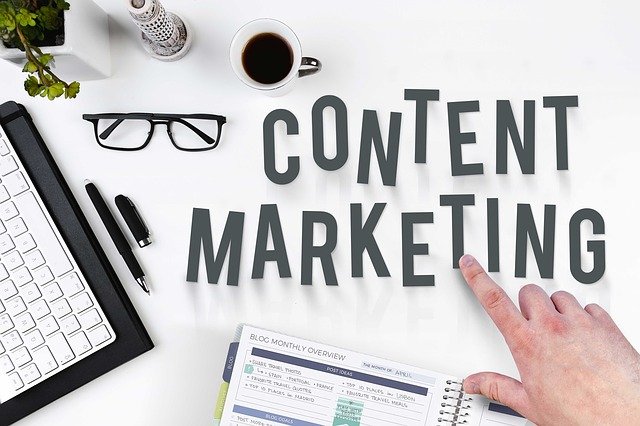
Content should be the new currency of marketing and those that deliver it effectively will engage their customers.
John Jantsch in The Referral Engine touches on what he calls the 4C’s Marketing as a new way of thinking. He is spot on.
Context, Connection, Content and Community, whilst they may not exactly replace the 4P’s, they certainly give them a run for their money! Here’s a brief overview from my perspective:
Context– Customers are looking to make sense of the explosion of data and information served up, in part, by the digital revolution. Truly understanding a customer’s life, their pressures and problems is a huge contextual opportunity. Situating your brand and its competitive advantage in a relevant, engaging manner is a core tactic of the future. But only if you truly understand the context.
Connection – Technology has increased the ability to connect but it’s how you balance so called ‘high tech’ connections with ‘high touch’ engagement that is key. Linking and informing what you learn online with how you behave and engage face to face will be a winning strategy.
Contentt – We have more than enough content! Your inbox is testament to that! Content can be the new currency for marketing. But only if it is authentic and genuine to your brand and business. Developed, curated, edited and remixed. Tailored to real problems. Delivered how your customer wants – face to face, email, blog, twitter, brochure, advertisements. If you understand the customer context then you can deliver content in a way that truly engages.
Community – Communities are built on shared interests and passions. The question you have to ask is does your business have a crowd or are you building a community? How do you motivate and connect your customers – either as a whole or, preferably, by sensible interest based groups. Effective communities around your business enable you to grow and develop.
Thinking about your business from the perspective of the 4C’s will throw up some interesting challenges to how you approach your marketing. It may just engage your customers in a dialogue… and that’s exciting!
James works with a wide range of organisations from large to small, start up to established. He facilitates planning and strategy workshops, undertakes reviews, develops insights and ideas, and mentors and coaches leaders. As Chair of the Growth Leaders Forum he helps business leaders unlock their potential and chart a path to growth – http://www.vantagemarketing.com.au/

by Russell Cummings | Dec 3, 2013 | Business Tips
With devices such as the iPhone and iPad taking homes, offices and almost all places by storm, browsing the web and connecting to sites like Facebook, Google+, Twitter is such an easy thing – making social media the newest and hottest technique for marketing.
Most businesses today have invested their marketing efforts into pushing their way into social media because that’s where people are. It makes a lot of sense but does it work and is social media an effective marketing tool?
Many businesses are not reporting a lift in sales from social media but it is widely acknowledged that there are a range of benefits from creating a stronger dialogue with the market.
So how do we measure these secondary benefits?
According to an infographic initially created by Pagemodo – Facebook’s marketing company, their initial research led them to conclude that the ROI of social media as a marketing tool was not measurable in monetary terms.
Instead, the kind of ROI that companies got from using social media for marketing was measured by the impact it creates.
But today, the Pagemodo study says that it looks like companies using this technique can now get an ROI both in monetary and impact terms.
Aside from these benefits, a Chief Marketer survey has also noted that marketers who used social media were using the following measures to determine the impact on the business:
• +60% numbers linking as friends, followers, likes
• +30% visits or time spent with brand social content
• +39% sharing, forwarding, retweeting, posting brand content
• +25% incremental sales attributable to social media
• +35% qualified leads from social media
• +18% brand awareness/favorability
With these statistics, you should be able to get a strong picture if the impact of social media on your business. But the tricky part here is how to get your social media audience engaged, how to grow their numbers and convince them to act on that engagement or interest.
With that said, here are some tips on effective social media marketing:
1. Find a platform that is used by your target market and focus on it. Don’t try and be “all things to all people”
2. Be active – log into your social profiles every day.
3. Be discerning with your connections and try to build a network that reflects your business, target market and personal values.
4. Interact with your followers – respond to direct messages and any effort made by people who are interested in engaging with your business, good or bad.
5. Post content that encourages conversation – post meaningful and interesting status updates about your business, encourage your social media audience to interact with your business.
6. Build market transaction – gain new followers, grow your audience.
7. Put some simple measures in place to track progress on a number of fronts.
So have you started a social media campaign for your business yet? If not, I encourage you to do so but make sure you are measuring the impacts to determine where you need to focus next.
What are you measuring and why?
Russell