Marketing has always played an important role in the success of businesses. It is one of the essential processes and is the major driver of future sales and profitability.
But what does marketing really mean?
Marketing is the process where businesses – whether for products or services – promote and position their goods in the market so that consumers will choose them over all the existing and similar products or services available.
Originally, marketing is best described in a 3-step model – stimulus, shelf and experience; where:
1. Stimulus refers to the point when a consumer gets stimulated or persuaded to buy a product because of an ad or a TV commercial;
2. Shelf, which is also known as the First Moment of Truth (FMOT) refers to the point when a consumer goes to his favorite store and selects the product with the help of visuals such as ads, displays and/or a salesperson, and;
3. Experience or the Second Moment of Truth (SMOT) is when the consumer actually uses the product, usually at home, after buying – it is the after-purchase experience with the product.
This model explains the basic steps in marketing until now. But ever since the internet, smartphones and other mobile devices have become part of our daily lives, a new step in the marketing process has been introduced.
This new step is called the Zero Moment of Truth or simply ZMOT (“zedMOT” in Australia!). It has been studied and presented by Google’s Managing Director of US Sales & Services and Chief ZMOT Evangelist – Jim Lucenski. He says “ZMOT is the critical new moment between Stimulus and the First Moment Of Truth.”
What is ZMOT?
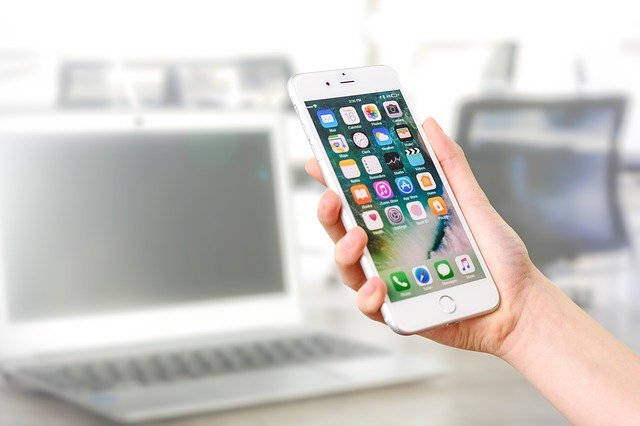
As Dina Howell, CEO of Saatchi and Saatchi X puts it – ZMOT is the future of marketing. And in today’s internet-able world, it happens every day. It is that moment when after being stimulated or encouraged to purchase by an ad or a TV commercial, a consumer grabs a smartphone or a laptop and searches for information, reads about reviews and opinions about the product he or she is wanting to buy.
The days for using the traditional 3-step mental model for marketing are no more. Today’s model now consists of 4 equally important steps – stimulus, ZMOT, FMOT and SMOT.
ZMOT happens online and in real time. For most people today it is the defining moment in the buying process. Consumers of all products and services are now doing their online research prior to calling or dropping into your business. This means that business owners need to be doing the basics well.
How You Can Use ZMOT in Business
Businesses can benefit from taking advantage of ZMOT in a lot of ways. But first, it is crucial for them to make themselves present in the virtual world. How?
One option is to put up a quality Website with good rankings for keywords in Google. With the popularity of free tools like WordPress and cheap hosting (Hostica.com) there is no reason why every business can’t have a simple website presence. This is a MUST have.
However, as consumers become more digitally adept they expect to see more information about you online. They want to see more than your self-generated content (website and traditional marketing).
They want to see how you interact with others and what other people have to say about you.
This is where Social Media becomes important. It’s not important which tool you use: Facebook, Twitter, LinkedIn, Youtube, etc. It’s important that you select one that resonates with your target market and begin to use it regularly.
Take the time or invest some cash with a good professional (I recommend David Ligtenberg from Itag Media – www.itagmedia.com) to ensure that your presence fits with your target and the image you wish to present.
Consumers nowadays are smart and want to be well-informed before actually buying. ZMOT helps them become the consumer they want to be. Where are you when your consumers or clients have their ZMOTs? Are you there?
If you haven’t integrated ZMOT into your marketing strategies yet, then now is the time to do so. Start reaping the benefits of ZMOT by following Jim’s seven smart ways.
1. Put someone in charge
2. Find your Zero Moment
3. Answer the questions people are asking
4. Optimize for ZMOT
5. Be fast
6. Don’t forget Video
7. Jump In
To find out more about this amazing new step in marketing, I suggest you download and read Jim’s ebook -ZMOT. It’s free! I learned a lot from it and I know you will too.
Meetings are an important part of communication in most businesses but it is a poorly understood discipline. For many people, a meetings is that it is something that is boring, takes a lot of time and has little value.
I suspect many people would say that meetings are dead or unnecessary, especially in a small business. Maybe it’s because many of us have been too exposed to traditional type of meetings which usually drag on for hours and seem to have little or no purpose.
I still believe that meetings are vital to improving communication and feedback throughout the business. However, we need to change the structure, timing and composition to suit our needs and help us become more productive, and the business more profitable. But we need a new paradigm for the humble meeting.
What do we need to do in order to create a new “meeting” paradigm?
The first thing we need to change is the name – MEETINGS. The mere mention of this name conjures all the wrong images in our minds. My suggestion is that you call your “new meetings” something else like: discussions, catch ups, toolbox talks, huddles, etc – anything but “meetings”. This will change the mindset right from the start.If you have any good alternative names then please post on the blog at the end of this post.
Get the structure right
Second issue to address is the structure. By this I mean 3 key elements:
Agenda
Duration
Attendees
AGENDA: Take the time to understand the purpose of the “meeting”. Why are we bothering? What are our expectations? Once you understand this, you can then create a simple agenda to meet these needs. Keep it tight and focused. Document only agreed actions arising from the meeting. The meetings should be about making decisions.
A simple Agenda could cover topics like: What’s going well? What’s not? How are we tracking on key KPI’s? What do we need to change? What is news? Previous actions. Agreed actions from this meeting.
DURATION: My advice, the shorter the better! Set tight timeframes for discussions on topics. Give everyone a chance to contribute within agreed timeframes. Don’t allow “time fillers” to waffle on. Establish rules around what and when a topic gets taken off-line from this meeting. (My general rule is anything that doesn’t involve 3 or more participants/departments should be taken off-line). You are better off to have more short, sharp, focused meetings with the right people on board than fewer, longer, less productive meetings.
ATTENDEES: This is a tricky one as you run the risk of bruising egos. However, if your business is to grow and develop you will need to address these issues at some point. Attendees need to be people who will add value and/or will be directly responsible for actions generated in the meeting. There should be no-one with “Observer” status. If you are part of the meeting you are expected to contribute.
FREQUENCY and TIMING
With today’s fast-paced lifestyle and dynamic businesses, most business owners say they haven’t got the time to meet formally, but will consider chatting over a cup of coffee periodically and hope that that will be good enough. They also use other forms of communication such as email and SMS in lieu of a quality meeting (not that these aren’t good tools for the right situation).
The problem is, although these people think they are saving time and money by having a fleeting meeting now and then, in reality they are wasting more than if they sat down with a proper agenda, and conducted a well-thought through meeting.
The basic rule for frequency is that – the bigger the challenge ahead of you and the quicker you need to deliver on that challenge then the more frequently your team needs to communicate. Meetings are certainly an important part of that communication process as they allow for fast fine-tuning of direction and activities to keep everyone on track to meet your business goals.
Set the frequency of your meetings to fit with the rate of change and the challenges being confronted.
Remember we are talking about short, sharp focused meetings not the rambling gatherings of old! You are better to meet more frequently for short periods than longer and less frequent.
Change your paradigm
Meetings of old are no longer relevant. Business and communication tools have changed but quality meetings are always an important part of business growth.
It’s time to upgrade to well-structured and short timeframe meetings (20 minutes or less) – short and sharp with clear outcomes and action plans. This way you get far better results, far better time efficiency and far better participation rates.
The number of people that I talk with who have a great idea for an iPhone app is incredible. The challenge for most of us in how to make it happen.
Too many of the online resources are superficial, high in hype and low in detail or aimed squarely at people with a high level of IT skills and experience. Most of the people I talk with are like me and have no programming skills and lack the time, drive and aptitude to develop them.
Despite my lack of skills, I have developed a 2 iPhone apps (Force Field Analysis & Competitor Analysis – both business apps) and have another 4 apps in development.
The process to get my apps developed was convoluted and challenging. Along the way, I have made plenty of mistakes but also found heaps of tools, tips and tricks. I have pulled all this together into a new 260 page eBook that explains the 9 Step Process of developing and marketing an iPhone app – in great detail.
The eBook also includes a listing of over 205 resources that you can use to develop your own iPhone application.
As a business coach working closely with business owners and managers in a wide variety of settings, I am frequently out of my office and “on the road”. In the last few years, I have found some great technology that has revolutionized my work.
Most of this has been fueled by increasing connectivity due to wireless broadband Internet, cloud based computing and integrated communication devices.
The tools of trade that I can no longer be without are:
SMARTPHONE: I use an iPhone as it seamlessly connects with my Mac and iPad making a truly integrated system. However, I have friends and colleagues with Blackberry and Android phones that provide the same evel of service.
Key elements are obviously the phone plus internet and email access. In addition there are a variety of apps that I use on my iPhone and iPad that are excellent. I also carry a set of headphones (standard Apple model) for making hands-free calls and listening to music on the phone.
My Smartphone allows me to quickly check emails and text messages between meetings and I can even respond with simple replies on my phone (big fingers and lack of fine motor skills restrict usability).
I synchronize my CRM (I use a Mac based CRM Daylite but you can use outlook, etc) so that appointments and contact details are maintained on all devices. I will discuss some of the key apps that I use below, but they are an essential part of being mobile.
Battery life on the iPhone often struggles to meet demand, so I carry a USB charge cable and a quick charge battery pack which is about the size of a box of matches (they still make them – don’t they?)
iPad 3GS: since purchasing my iPad about 6 months ago, I wonder how I ever got on without it.
Previously I would cart my laptop plus assorted cables and chargers and a USB Internet connection with me all day. I had a large computer bag to carry my computer, peripherals and client books. This usually weighed more than 4kg hand luggage limit on our local commuter airline meaning that I would often have to have my equipment (I always kept my laptop in hand) in the hold of the plane – another inconvenience.
With the iPad, all I carry is a USB charging cable (same one as the iPhone) but I rarely have to use it as the iPad has excellent battery life. For overnight trips I will take the wall charger but this is a very small unit so it’s not a drama. I also carry an adapter cable that will let me plug my iPad into a monitor or data projector for use with presentations. This plus the Livescribe pen and writing pad (in a leather folio) fits into a small leather briefcase rather than a large computer bag.
While the iPad is not a full laptop replacement it does 80% of the things I require when on the road. I can type simple documents (actually I’m typing this blog in a cafe on my iPad), use simple spreadsheets, edit and deliver simple PowerPoint presentations, check my email, surf the web, update social media sites (LinkedIn, Facebook, Twitter), complete skype calls, use my CRM and various other apps.
The screen based keyboard is not ideal but is passable for most of my needs – however, I’m about to upgrade to an iPad 2 and will look for a very portable wireless Bluetooth keyboard to match it – I’ll keep you posted on progress.
2011 will see the release of a number of competing products for the iPad and sure many of these like the Android phones will be quite good. I am an unabashed Apple fan – the stuff just works!
But whatever brand you choose, make sure that each of your devices is very compatible with the others – it just makes life easier.
LIVESCRIBE SMARTPEN: (www.livescribe.com) possibly the best investment I made in 2010 was this innovative smartpen. It is a literally a small computer in a pen and has fundamentally changed the way I work with my clients (actually the product works so well that many of them now have Smartpens oftheir own).
The Smartpen is an electronic biro. You use it on custom stationery, although you can print your own. The pen uses an infrared camera and “invisible markers” on the stationery so that it knows in what book, what page and where on that page you are writing.
It records every pen stroke and allows you to upload a copy of the page to your computer. You can then share your notes with others via PDF, Evernote or uploading the website.
You can also record audio with the pen and it will sync the audio and writing so that when you play it back you can see what was being said (recorded) at the time you were writing. Great for lecture notes and seminars.
I use it to record my meetings with clients, then when I return to the office, I upload to my desktop (there is no iPad app) and then send a copy, usually PDF, to my client. If necessary, I will also need a copy to my VA for typing.
Stationery is available in a variety of sizes and formats and is reasonably priced.
It is a great idea that works really. The pen is a little chunky but after using it for a while I don’t find it a chore to write with.
So that is the technology that is really working for me.
What technology are you using and how does it give you leverage?
You know, I think that over the last few decades that “business” has lost the art of managing their people. (I say “business” because obviously there are some great managers out there – but, in general, management is a lost art!)
We’ve managed to pull through the GFC (“Global Financial Crisis”) and have emerged into a market that is very competitive, with tighter margins and that is far more globalised than ever before.
There are also significant opportunities for businesses that are have the capacity and capability to embrace them. But here lies the challenge…
I am finding that most businesses do not have the necessary “middle- management” skills and personnel to pull it off.
Why is this so?
Well, in an effort to become more efficient, we have “exised the fat” and removed layers of middle-management by pushing more and more responsibility down the “chain of command”.
“Delegation and empowerment” have been the buzz words of the first decade of this century. Now, this was fine when economies and businesses grew at unprecedented rates and that being an effective sales person meant that you were quickest to the fax to collect new orders when they came through.
In the 1980’s and 1990’s, high profile CEO’s (“Chainsaw” Al Dunlap, etal) made a big impact with their “razor gangs” laying off hundreds of thousands of people, mainly middle managers, in the search for improved profits.
I believe this was short-term thinking and that the long-term effects were camouflaged by the huge economic growth from the late 1990’s to 2008.
“Money can paper over a lot of cracks” has been my mantra and since 2008, when the cash vanished, the cracks have been laid bare.
My colleague, Mike Boyle – the Sales Scientist (Mike is a leading sales consultant and if you’re having any issues with sales in your business – you need to contact him at www.banjargroup.com.au ) – has found similar issues in Sales Management and has expressed it beautifully.
Mike says “If managers are seen as by managing by results, they are actually managing by fear.
If they are seen as managing by activities, they are managing by pressure.
Neither of these management strategies will grow the capabilities of the team to meet future challenges.
They should be placing a large proportion of their time in developing and coaching their sales team to lift skills, improve knowledge and change behaviors” and he has the data to prove that this works.
I agree wholeheartedly with Mike. In essence, we have lost the art of coaching and mentoring our team members.
We are often very good at measuring the numbers and “cracking the whip” on activities but not very good at coaching our team to build skills, knowledge and change behaviours.
I believe it will be exacerbated in our changing workforce, as the “experience” of the Baby Boomers leaves the workforce and is replaced by the “enthusiasm” of Gen Y who have not been coached and developed to the same extent.
For me, this raises a couple of fundamental questions:
What are your managers doing to “grow” their people?
How will you move from a management culture based on fear and pressure to one based on mentoring and growth?
Your answers will be critical to your long term business success.